
Differences and Selection of EVA and PUR Edge Banding Adhesives: How to Determine in Furniture Edge
Product Overview
Product Highlights
Applications
Product Parameters
Notes
Product Details
The Essential Difference Between EVA Edgebanding Adhesive and PUR Edgebanding Adhesive
Both EVA edgebanding adhesive and PUR edgebanding adhesive can be used for furniture edgebanding, but their film-forming and curing mechanisms differ. EVA edgebanding adhesive is a thermoplastic hot melt adhesive that melts when heated, then cools after application to form a bonding layer; when exposed to sufficiently high temperatures again, the adhesive layer may soften once more. PUR edgebanding adhesive is a reactive polyurethane hot melt adhesive. Initially, it also relies on hot melt application and cooling for positioning, but subsequently reacts with moisture to form a more stable crosslinked structure, generally providing stronger resistance to heat, moisture, water vapor, and chemical media.
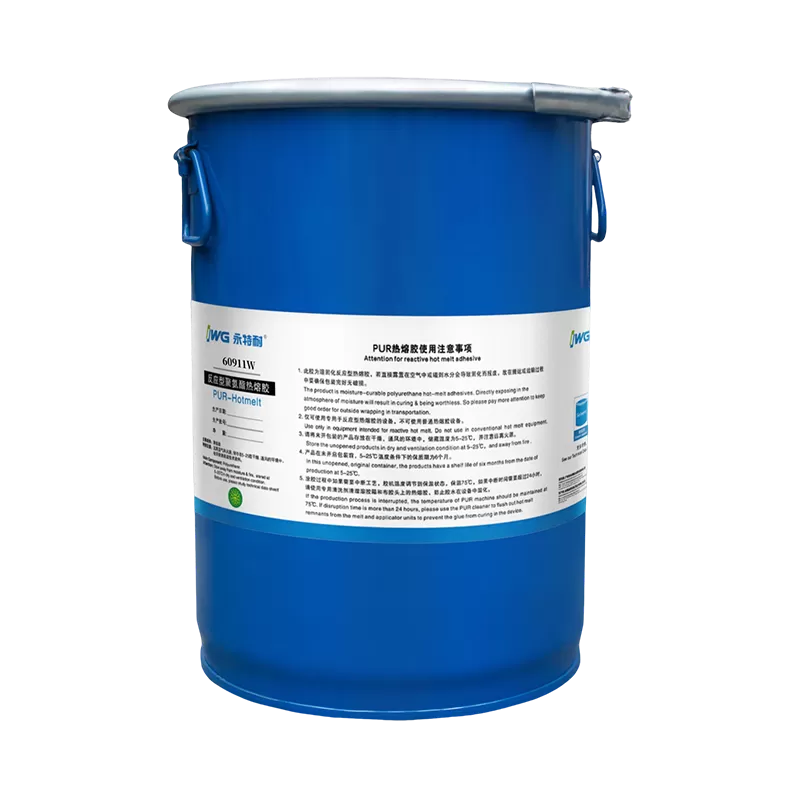
This difference defines the application boundaries of each. EVA is more of a mature, versatile, and highly efficient standardized choice; PUR is more of an upgraded solution for high-end appearance, high durability, and high-risk scenarios. When making decisions, furniture factories should not only consider the unit price of the adhesive but should look at order type, end-use environment, rework costs, customer acceptance standards, and equipment modification costs. To learn about specific PUR products, please refer to PUR Edgebanding Hot Melt Adhesive and PUR Edgebanding Adhesive 60911W.
Heat Resistance Differences
EVA edgebanding adhesive can meet the needs of a wide range of furniture production in ordinary indoor environments, but the risk of adhesive layer softening increases in scenarios such as high-temperature warehousing, summer container transport, proximity to kitchen heat sources, or heating of dark-colored door panels. Different EVA models have varying heat resistance ratings and cannot be generalized, but the thermoplastic mechanism dictates that its upper heat resistance limit is typically not as high as that of cured PUR.
After curing, PUR edgebanding adhesive forms a more stable adhesive layer structure, making it more suitable for high temperatures, thermal cycling, and long-term storage. For export furniture, turnkey projects, fine-finish projects, kitchen cabinets, bathroom vanities, and high-end custom orders, heat resistance performance is often a key reason for choosing PUR. It is important to note that PUR also requires adequate curing time; the immediate strength right after production does not fully represent the final heat resistance capability.
Moisture and Water Vapor Resistance Differences
Edgebanding failure in furniture is often related to moisture ingress into the panel. Once the edgebanding adhesive bond line loosens in a humid environment, moisture can penetrate along the edge into the substrate, causing swelling, blistering, edge lifting, or mold growth. EVA edgebanding adhesive is suitable for many typical dry indoor furniture applications, but careful evaluation is needed for use in bathrooms, kitchens, coastal areas, underground spaces, and environments with long-term high humidity.
PUR edgebanding adhesive offers superior water vapor resistance, which is why it is commonly used for moisture-resistant panels, bathroom vanities, kitchen cabinets, laboratory furniture, and export projects. It is not a universal solution to replace the moisture resistance rating of the panel itself, but it can enhance the overall reliability of the edgebanding system. During actual verification, the panel's moisture resistance rating, edgebanding back-coating, adhesive layer integrity, and pressing quality should all be assessed together.
Adhesive Bond Line Appearance and Finished Product Grade
With the increasing application of high-gloss, tactile, PET, dark-colored, and narrow-edge door panels, user requirements for bond line appearance are becoming higher. If the adhesive application amount for EVA edgebanding adhesive is not well controlled, issues such as thick bond lines, contamination, stringing, or color mismatch can easily occur. Low-filler, thin-bond-line EVA products can improve appearance, but this must still be combined with equipment precision.
PUR edgebanding adhesive generally offers advantages in achieving fine bond lines and appearance stability, making it especially suitable for high-end custom furniture and orders requiring an effect similar to laser edgebanding. However, bond line appearance is not determined by the adhesive alone; panel flatness, edgebanding back-coating, pressure roller force, trimming tools, and polishing/cleaning processes all affect the final result. After switching to PUR, new equipment parameters still need to be established.
Equipment and Operational Cost Differences
EVA edgebanding adhesive is highly equipment-friendly, suitable for application with standard glue pots, rollers, and routine cleaning procedures, fitting workshops with multiple varieties, frequent adhesive changes, and variable production paces. The overall cost of EVA is typically easier to control, and the learning curve for operators is low, which contributes to its long-standing popularity.
PUR edgebanding adhesive places higher demands on equipment sealing, glue supply systems, shutdown procedures, and cleaning agent compatibility. If the equipment is not PUR-ready or management is inadequate, issues such as premature curing, difficult cleaning, nozzle clogging, or glue pot residue may occur. Therefore, before introducing PUR, it is essential to verify equipment conditions and provide personnel training. It cannot be used simply by following EVA habits.
Total cost should not be evaluated solely by price per kilogram
When comparing EVA and PUR, many factories first consider the adhesive unit price, but a more reasonable comparison method is the "total unit product cost." This includes adhesive consumption, reject rate, rework rate, customer complaints, after-sales costs, equipment maintenance, downtime for cleaning, order grade, and brand premium. For low-risk orders, EVA may be more economical; for high-end orders, although PUR has a higher unit price, it may increase overall profitability by reducing rework and complaints.
If products are sold to markets with high humidity, high temperatures, or export requirements, the cost of after-sales issues often far exceeds the adhesive price difference. Conversely, if the product is used in mild environments, has standard customer acceptance criteria, and the production line is highly cost-sensitive, choosing high-end PUR may not be the optimal solution. The key to selection is matching materials, equipment, orders, and after-sales risks.
How to assess different furniture products
For kitchen cabinets, bathroom cabinets, balcony cabinets, hotel furniture, apartment furniture, school furniture, commercial space furniture, and export furniture, it is generally recommended to prioritize evaluating PUR edgebanding adhesive. For standard wardrobes, bookshelves, office furniture, temporary display cabinets, and standard furniture used in dry indoor settings, a comparison between EVA and PUR can be made based on customer requirements. If the customer explicitly requires heat resistance, moisture resistance, minimal glue line, or a high-end appearance, PUR sampling should be prioritized.
Within the same factory, it is not necessary to use a single type of adhesive across all production lines. A more mature approach is to establish an adhesive strategy by product grade: use stable EVA for standard orders, PUR for key projects and high-end orders, and conduct separate trials for special materials or special environments. This allows cost control while preventing high-risk products from using lower-grade solutions.
Sampling and validation recommendations
When comparing EVA and PUR, it is recommended to use the same batch of panels, the same batch of edgebanding, the same equipment, and recordable process parameters for controlled testing. Test items should include immediate peeling, peeling after 24 hours of rest, thermal cycling, heat and humidity resistance, glue line appearance, edge trimming effect, cleaner wipe resistance, and edge stability after actual assembly. Judging solely based on whether adhesion occurs immediately after production cannot determine long-term risks.
If switching from EVA to PUR, start with small-batch trial production and then gradually expand to formal orders. During trial production, record line speed, temperature, adhesive application amount, pressure roller pressure, humidity, downtime, and cleaning methods. Based on the application parameters provided by the customer, IWG WINLONG can assist in determining whether it is suitable to continue using EVA, upgrade to PUR, or adjust the process for specific materials and equipment.
Frequently Asked Questions
Will EVA edgebanding adhesive be completely replaced by PUR edgebanding adhesive?
No. EVA remains important for standard furniture, packaging, and cost-sensitive production. PUR primarily demonstrates its advantages in orders requiring high durability, high moisture resistance, high appearance standards, and high-risk mitigation.
Why do many high-end custom furniture makers prefer PUR?
Because high-end custom furniture places greater emphasis on glue line appearance, long-term stability, heat and moisture resistance, and after-sales risk control — areas where PUR typically meets requirements more easily.
After using PUR, is it still necessary to pay attention to edgebanding back-coating?
Yes. Edgebanding back-coating, material surface energy, and batch-to-batch consistency still affect wetting and peel strength. PUR cannot replace material quality control.
Can EVA and PUR be switched on the same equipment?
It depends on the equipment structure and cleaning conditions. Some equipment supports switching, but it must be cleaned according to the adhesive and equipment requirements to avoid cross-contamination and premature curing of PUR adhesive.