
Panel Glue: Introduction and Features
EVA carton sealing hot melt adhesive is a thermoplastic resin primarily made from EVA, used for packaging carton sealing. It is suitable for bonding corrugated paper, kraft paper, Styrofoam, packaging paper, and other materials, and is applicable for manual carton sealing with various hot melt glue gun equipment. The Yongtenai EVA carton sealing hot melt adhesive series SH30012 and SH30018 are both transparent granular adhesives, environmentally friendly. SH30012 is suitable for bonding corrugat
Introduction to Wood Splicing Adhesive
Wood splicing adhesive refers to an adhesive used for bonding wood products such as laminated lumber, suitable for splicing and bonding non-structural and structural laminated lumber, etc. The main component of the wood splicing adhesive is a specially formulated waterproof polyvinyl acetate emulsion, and the curing agent is typically an isocyanate. The main component appears as a milky white viscous liquid, while the curing agent is light brown. The main component of the wood splicing adhesive can generally be used alone as a finger joint adhesive.
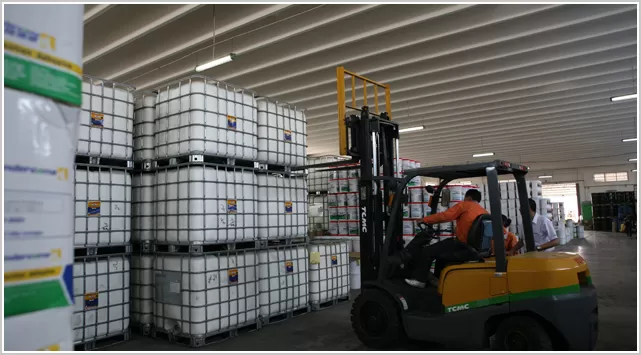
Characteristics of Wood Splicing Adhesive
I. Wood Control:
1. Moisture content control: below 14%;
2. Keep the bonding surface flat, without wavy, curved, or twisted surfaces. For wood prone to deformation (such as oak, ash, etc.), pieces planed on the same day must be spliced on the same day; if left overnight, they must be re-planed;
3. Before splicing, thoroughly remove all wood dust and dirt from the surface.
II. Adhesive Mixing Method:
1.When mixing the curing agent, determine the amount of adhesive to mix based on the size of the mixing container. Only use up to one-third of the container's volume for mixing; otherwise, the reaction may cause foaming and overflow.
2.It is advisable to use a flat-bottomed, round plastic bucket for mixing, as this type of container makes it easy to stir the curing agent evenly.
3.Do not add water or other substances to the adhesive, as this may cause coagulation or a sharp decrease in strength.
4.Wood splicing adhesive mixed with curing agent should generally be used within 12 hours (the effect is more pronounced if used after the foam settles).
5.Unused curing agent must be stored in a strictly sealed container, without any water ingress, to prevent hardening and rendering it unusable.
6.Once the mixing ratio of the curing agent is determined, it must not be arbitrarily changed; otherwise, key functions such as bonding strength and water resistance will be seriously affected.
III. Control of Adhesive Application Amount:
Users should determine the application amount based on the ambient temperature and humidity at that time. When the ambient temperature is low, humidity is high (below 80%), and the wood is hard, a smaller amount should be applied; when the ambient temperature is high, humidity is low (below 60%), and the wood is soft, a larger amount is needed.
IV. Application Method:
Due to the high viscosity (thickness) of the adhesive, it is recommended to use a manual glue spreader, a hog bristle brush, or a rubber scraper for even application. The application rate is generally controlled between 150g-250g/m² (for hard broadleaf wood, apply 120g-150 g/m²; for softwood, apply 120g-250 g/m²). Workpieces should be spliced as soon as possible after adhesive application to prevent a film from forming on the surface, which could lead to false bonding and easy debonding.
V. Pressurization Method and Time:
Regardless of the pressurization method used, maintain even pressurization with multiple pressure points spaced 30-50cm apart. The pressurization time depends on the on-site temperature and air humidity. Except for rotary disc splicing machines, which require a pressurization time of 30-40 minutes, other pressurization methods are normally defined as (at 25℃, humidity below 60%) 2-4 hours. When splicing under high temperature and low humidity conditions, the pressurization time can be shortened to about one hour; conversely, 4 hours or more may be required.
VI. Inspection During Pressurization:
During pressurization, watch for wood slats pulling out (unlevelness and size differences make this more likely). If pull-out occurs, release pressure and reposition; do not force repositioning under pressure. Check whether adhesive squeezes out from the joint line. If no adhesive squeezes out, it indicates insufficient application or that the waiting time before pressing was too long. Correct this phenomenon immediately if observed. The pressurization inspection step must not be overlooked.
VII. Conditioning Period After Pressure Release:
In solid wood panel splicing or finger-jointing processes, to prevent debonding, assembled workpieces must undergo a stacking and conditioning process after pressure is released. Depending on the wood type and climatic conditions, set an appropriate conditioning period to ensure normal use in the next process. We recommend: under conditions of low temperature, high humidity, and hard wood, set the stacking and conditioning time to 3-5 days; under conditions of high temperature, low humidity, and soft wood, a conditioning time of 1-2 days is suitable.
VIII. Handling of Excess Adhesive:
Any unused wood splicing adhesive already mixed with curing agent must be temporarily stored in a tightly sealed container for subsequent use (do not expose to air for extended periods to prevent skin formation). This will not affect the splicing quality.