
IWG Woodworking Adhesive Expert: Glossary of Common Edge Banding Hot Melt Adhesive Terms
In the operation and usage instructions for hot melt adhesives, there are often some technical terms that are difficult to understand. Today, Yongtenai will explain some common terms related to edge banding hot melt adhesives to help with the understanding of hot melt adhesive operation and usage.
In the operating instructions for hot melt adhesives, there are often some technical terms that are difficult to understand. Today, Yongtenai will help explain some common terms related to edge banding hot melt adhesives, to assist in understanding their operation and use.
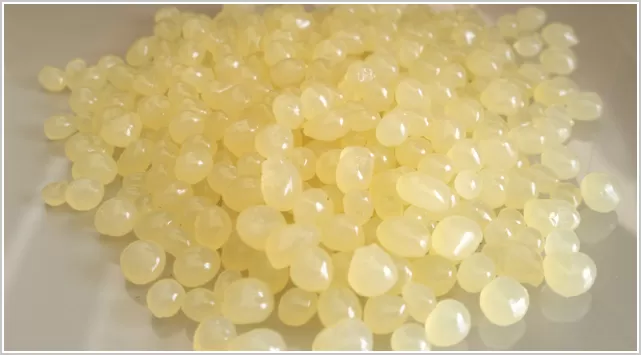
Hot Melt Adhesive: A thermoplastic adhesive material mainly composed of polymers, applied in a molten state and solidified upon cooling. It is 100% solid at room temperature.
Thermoplasticity: The property of being able to repeatedly melt and solidify under heating or cooling. The opposite is thermosetting.
Viscosity: An indicator of fluid flowability; high viscosity means poor flowability. It is related to factors such as the fluid's own properties, temperature, concentration, and shear rate.
Softening Point: The temperature at which a material softens upon heating and approaches a flowable state.
Open Time: The time interval from when the adhesive is applied until the surface can still bond to the substrate. Good bonding results are achieved only within the open time. It is related to factors such as the adhesive, temperature, substrate, and coating weight.
Setting Time: The short time required for the adhesive, after being pressed between two substrates, to form a strong bond.
Cohesion: A microscopic term for the material's own strength, approximating tensile strength.
Heat Resistance: The maximum temperature the bonded system can withstand without bond failure.
Thermal Stability: The ability of a material to withstand high temperatures over a long period.
Aging Resistance: The degree to which the bond strength or adhesion of a bonded system changes over time during storage at room temperature.
Low Temperature Resistance: The ability of a hot melt adhesive to maintain good bond strength or adhesion at low temperatures.
Stringing: Refers to the fine threads that appear at the tail of the hot melt adhesive when it is transferred from the applicator head to the substrate. It is related to the properties of the hot melt adhesive, application temperature, and coating method.
Edge Banding: The process of bonding edge banding material to a panel.
Trimming: Generally divided into rough trimming and fine trimming, it is the process of removing excess adhesive and edge material from the top and bottom after banding.
Cutting: Includes front cutting and rear cutting, which are the processes of removing excess edge banding material from the front and rear ends.
Thoroughly researching the five core processes of the woodworking industry application techniques: edge banding, surfacing, laminating, jointing, and assembly. For the detailed quality of your product manufacturing, Yongtenai Woodworking Adhesive is stricter than you are! If you are interested in our woodworking adhesives or have any questions, please click the online customer service, or call our national unified hotline: 400-788-2233. Yongtenai's edge banding hot melt adhesive experts are sincerely looking forward to your inquiry!