































Professional woodworking adhesive expert IWG reminds you of the precautions for using epoxy resin assembly adhesive
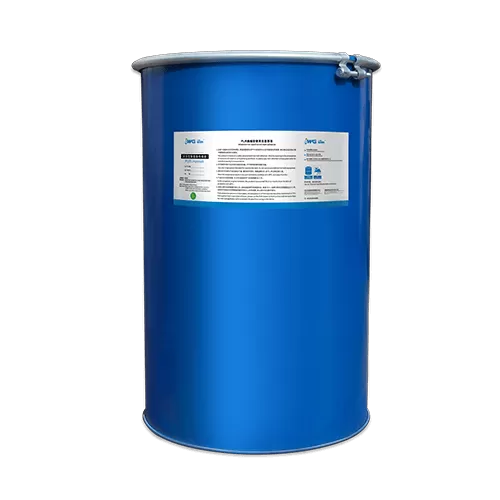
Epoxy resin assembly adhesive, also known as iron adhesive. Epoxy resin assembly adhesive has a 100% solid content, so its joint filling performance is particularly good. After hardening, it can fill the gaps in wood without severe shrinkage and expansion due to climate change, making it suitable for wood tenon bonding; Wood materials, metal materials, and non-metallic materials such as glass, cement, and ceramics also have good bonding properties, and hard or foamed PVC can also be bonded.

Precautions for using epoxy resin adhesive:
(1) If the mixing ratio exceeds the standard range, the contact force will decrease significantly. Therefore, different mixing ratios must be selected according to the special purpose, and cannot be changed arbitrarily. Moreover, the correct volume ratio or weighing must be carried out each time, and no carelessness is allowed.
(2) Uneven mixing, such as improper mixing, can easily cause the AB glue to remain viscous and not harden, resulting in bonding failure. Especially in winter, the viscosity of the resin increases significantly due to cold weather, making it difficult to mix evenly. As a result, the AB glue cannot fully harden, leading to frequent poor bonding. Please pay special attention to this, which is the main reason for poor bonding quality and returns.
(3) After mixing the main agent and hardener, an exothermic reaction will occur, causing high temperatures and rapid hardening. The more the mixing amount, the faster the heating. Therefore, the maximum mixing amount is limited to 1kg of the main agent and 1kg of the hardener each time. If too much is added, such as 10kg of the main agent and 10kg of the hardener, there is a risk of resin cracking due to high heat reaction. Therefore, please do not mix too much at once.
(4) When the temperature exceeds 35 ℃, in order to extend the working time, the amount of 901 B glue can be reduced by 10-20%, but it must not exceed this limit. Alternatively, A glue can be placed in a refrigerator at 5 ℃ and mixed with B glue. At low temperatures, the viscosity increases and it is not easy to pour out.
(5) A glue (white main agent) and B glue (light brown hardener) must be mixed completely and evenly:
At 15-30 ℃: the general capacity ratio is 901A: 901B=100cc: 100cc
(Weight ratio 901A (100g): 901B (90g)
At 30-35 ℃: 901A: 901B=100cc: 90cc
(Weight ratio 901A (100g): 901B (80g)
(6) Even if only a small portion of A and B adhesives are mixed unevenly, it can still cause adhesive bonding failure, especially in winter. Please make sure to mix them evenly. It is recommended to stir the adhesive solution again after 10 minutes of mixing.
Note (1): When the temperature in northern mainland China is below 15 ℃, the viscosity increases and it is difficult to mix evenly. Therefore, please preheat B glue to 30 ℃ first, which makes it easier to flow out and mix evenly. When the temperature is below 10 ℃, 901AB cannot be completely hardened. Therefore, the glued product needs to be placed in a heating or wood drying room at 20-40 ℃ for more than 24 hours to ensure complete resin hardening.
Note (2): Single liquid 100% PU adhesive can be used at 5-15 ℃, and it can fully harden without heating at low temperatures. Our company also supplies adhesive suitable for winter bonding without heating.
The industry has created a unique "dual core value chain", and IWG Woodworking Adhesive is supported by leading technology and diversified products, ensuring the quality of product details from pre-sales, sales, and after-sales. What are you still hesitating about?! Hurry up and click on the online customer service, or call the national unified discount hotline: 400-788-2233. Our professional consultant for IWG epoxy resin assembly adhesive is waiting for you!