













FAQ-PUR Edge Bonding Technology - Common Questions
Target Audience: Production Supervisors, Technical Engineers, Equipment Operators, Purchasing Managers, Quality Control Managers of Furniture Manufacturing Enterprises
Table of Contents
No. | Category | Applicable Audience | Corresponding Questions |
I | Basic Knowledge Section | All Audiences | Q1-Q4 |
II | Operation Procedure Section | Production Supervisors, Technical Engineers, Equipment Operators | Q5-Q11 |
III | Process Parameter Section | Production Supervisors, Technical Engineers | Q12-Q15 |
IV | Common Troubleshooting Section | Production Supervisors, Equipment Operators, Quality Control Managers | Q16-Q25 |
V | Equipment Maintenance Section | Equipment Operators, Technical Engineers | Q26-Q28 |
VI | Product Compliance Section | Purchasing Managers, Quality Control Managers | Q29-Q30 |
I. Basic Knowledge Section 【Applicable Audience: All Audiences】
【Q1】What is PUR hot melt adhesive? What is the difference between it and EVA hot melt adhesive?
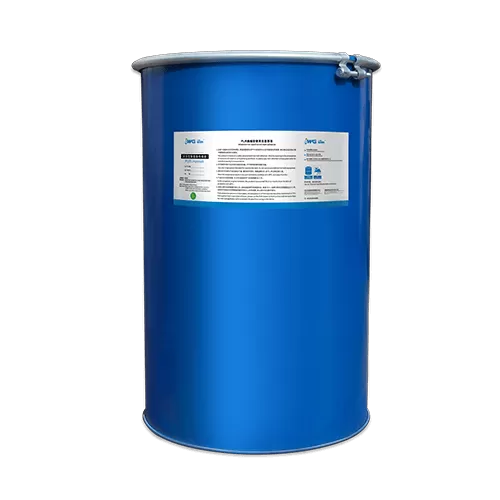
【A1】 PUR (Poly Urethane Reactive) stands for moisture-curable reactive polyurethane hot melt adhesive. Unlike the physical curing of traditional EVA hot melt adhesive, after PUR hot melt adhesive cools down and achieves preliminary physical curing, its isocyanate groups (-NCO) will continue to chemically react with water molecules in the ambient air or wood substrate to complete moisture curing. This chemical bonding is irreversible under non-extreme conditions, which endows PUR hot melt adhesive with superior bonding performance.
The main performance comparison between PUR and EVA is shown below:
Comparison Item | PUR | EVA |
Coating Weight | 150-180g/m² | 250-280g/m² |
Adhesive Line Thickness | 0.05-0.08mm | 0.1-0.15mm |
Temperature Resistance Range | -40℃ to 140℃ | -10℃ to 70℃ |
Bonding Strength | 100-230N | 50-90N |
Moisture Resistance | Excellent | Fair |
Application Cost | Approx. 0.1 RMB/m | Approx. 0.06 RMB/m |
In addition, PUR outperforms EVA in mold resistance (Aspergillus flavus, Aspergillus niger, Trichoderma viride, etc.).
【Q2】What industries and materials are suitable for PUR edge banding?
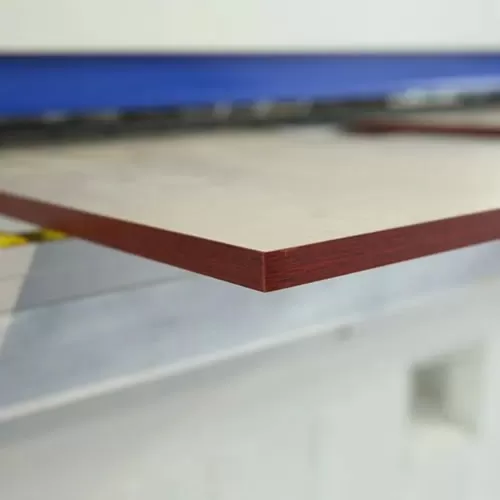
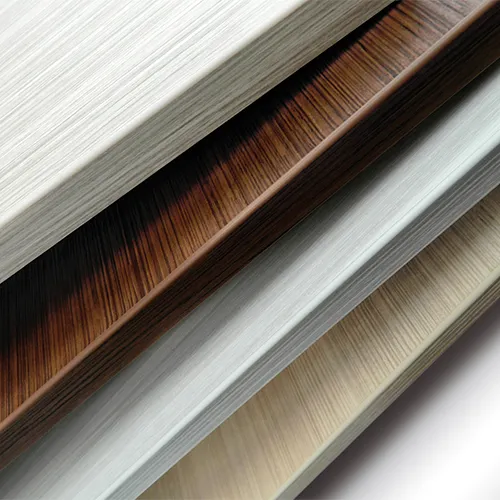
【A2】 PUR edge banding technology is widely used in custom furniture, high-end custom furniture, panel furniture, wooden doors, flooring, cabinets and other fields. In terms of material compatibility, PUR hot melt adhesive can bond various edge banding strips such as PVC, acrylic, PET and aluminum alloy with substrates.
【Q3】What is the bonding principle of PUR edge banding? Why can it achieve irreversible bonding?
【A3】 PUR hot melt adhesive is a moisture-curable reactive polyurethane hot melt adhesive. Its bonding process has two stages: The first stage is physical curing — the adhesive is initially shaped after cooling; the second stage is chemical curing — the isocyanate groups (-NCO) in the adhesive undergo chain extension reaction with water molecules in the ambient air or substrate to form a rigid crosslinked structure of polyurethane molecular chains. This chemical crosslinking makes PUR bonding irreversible, with remarkably better heat resistance, hydrolysis resistance and chemical resistance than traditional thermoplastic hot melt adhesives. PUR hot melt adhesive generally takes 3 to 7 days to fully cure.
【Q4】What environmental requirements does PUR edge banding have for production?
【A4】 PUR is a moisture-curable reactive hot melt adhesive and is greatly affected by ambient temperature and humidity. Recommended production conditions are as follows:
· Ambient temperature: 20-35℃ is the suitable range. Local cooling is required when the temperature is high. When the temperature is below 20℃, low substrate temperature will cause the hot melt adhesive to cool rapidly, shorten the open time and bring risks of pseudo-bonding.
· Ambient humidity: Relative humidity of 45%-75% is suitable. A humidifier shall be installed if the environment is dry.
· Special winter reminder: When the ambient temperature is below 15℃ and relative humidity is below 30%, the full curing time will be extended. It is recommended to set up a conditioning room for heating and humidification, with a conditioning period of no less than 24 hours.
II. Operation Procedure Section 【Applicable Audience: Production Supervisors, Technical Engineers, Equipment Operators】
【Q5】What units are included in the standard operation procedure of PUR edge banding equipment?
【A5】 The standardized operation procedure of PUR edge banding equipment includes the following units in sequence:
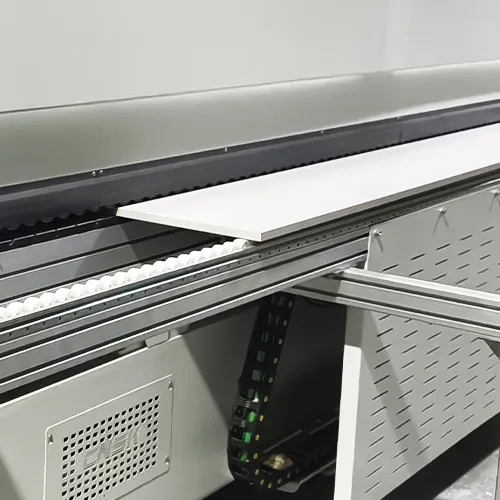
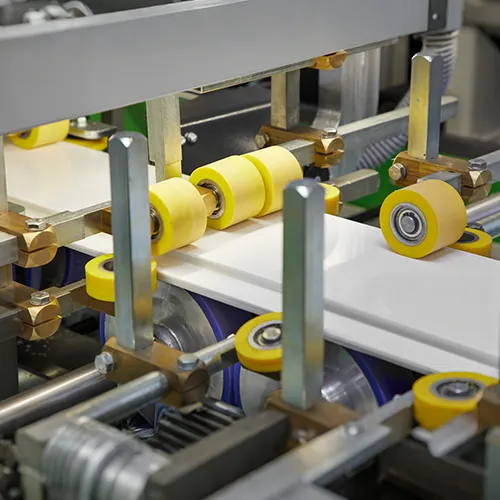
Preheating (temperature control) → Release agent spraying → Pre-milling → Iodine tungsten lamp (substrate heating) → Glue application & pressing → Side pressure wheel pressing → Rough trimming → Fine trimming → Tracking chamfering → Arc scraper → Scraper device → Polishing wheel. All units work in coordination to ensure consistent and stable edge banding quality.
【Q6】What is the function of the release agent device and what precautions should be taken?
【A6】 The release agent device has two functions: release agent and cleaning agent:
· Release agent: Atomized and sprayed on the board surface to prevent overflowing hot melt adhesive from sticking to the board during edge banding, facilitating cleaning in subsequent processes.
· Cleaning agent: Atomized and sprayed on the board surface to remove residual glue and debris, and restore the edge banding strip to its original gloss.
Precautions:
1. Oil-based release agents have relatively good decontamination effect;
2. Check the spraying angle and dosage of the release agent to avoid pinholes and glue lines caused by excessive dosage;
3. Regularly check whether the spray nozzle and stop valve are blocked to ensure uniform atomization.
【Q7】What is the function of the iodine tungsten lamp (substrate preheating)?
【A7】 When the ambient temperature is below 20℃, the substrate (board) temperature is low. After hot melt adhesive is coated on the board surface, it cools rapidly, which significantly shortens the open time of the hot melt adhesive and brings risks of pseudo-bonding when laminated with the edge banding strip. The iodine tungsten lamp device quickly preheats and raises the temperature of the board edge before glue application, ensuring a suitable substrate surface temperature during gluing, extending the effective open time of the adhesive, and improving wettability and bonding strength.
【Q8】What is the function of the pre-milling device and what are the common problems?
【A8】 Function: The pre-milling device removes saw marks generated by grooving saws and repairs edges damaged during workpiece handling, so that the subsequent glue line is smoother and more uniform.
Common problems:
· Uneven board edges after milling;
· Poor sealing between substrate and PVC edge banding strip;
· Local glue shortage.
Precautions: A large amount of wood dust will be generated during pre-milling. If the equipment is not equipped with an air blowing device or has insufficient chip removal capacity, wood dust will adhere to the gluing surface and block the glue roller, resulting in uneven glue coating. It is recommended to consult the tool manufacturer to confirm whether the gluing surface is designed to be flat or concave for accurate adjustment of the gluing surface.
【Q9】What are the components and adjustment points of the glue application device?
【A9】 Adjustment of the glue application device involves three technical points: glue pot travel, glue layer thickness and verticality.
· Types of glue rollers: knurled roller and transverse grain roller, with three grain depths of 0.6mm, 0.8mm and 1.0mm. The grain depth directly affects the glue coating weight and glue line effect.
· Glue layer thickness: affects board surface cleanliness, glue line thickness and pinhole probability.
· Rebound space: Appropriate rebound space shall be reserved for the glue application unit to avoid affecting the gluing effect at the rear end of long boards; worn bearings will cause the glue to turn black.
· Critical clearance: The clearance between the glue application bearing and the board is recommended to be adjusted to 0.1mm for optimal performance.
【Q10】How to control and test the glue coating weight?
【A10】 The recommended glue coating weight for PUR edge banding is 150-190g/m². There are three common testing methods:
1. Blade method: Scrape the glue layer of a unit area with a blade and weigh to calculate the coating weight;
2. Glue transfer method: Observe the proportion and uniformity of glue transferred from the glue roller to the board surface;
3. Extrusion method: Estimate the glue coating weight from the width and thickness of the squeezed glue line after edge banding.
Operators can regularly verify the glue weight by combining the three methods to ensure process stability.
【Q11】How to judge whether the glue application state is appropriate?
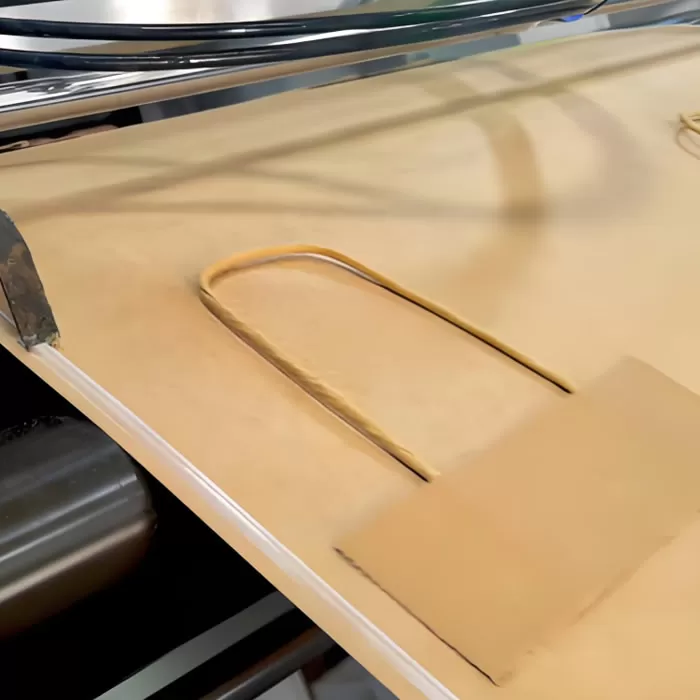
【A11】 A proper PUR glue application state means the glue layer evenly covers the gluing surface without missing coating or accumulation, with fine glue lines (0.05-0.08mm). Taking particle board as an example, the board texture is clearly visible and the glue penetrates uniformly under the proper coating weight.
Typical signs of excessive glue weight: Over-thick glue layer, obvious glue accumulation on the board surface, glue marks and spots easily appearing after subsequent fine trimming and polishing, and higher glue cost. Differential adjustment shall be carried out according to substrate types (160-180g/m² for particle board, 130-160g/m² for MDF/plywood).
III. Process Parameter Section 【Applicable Audience: Production Supervisors, Technical Engineers】
【Q12】How to set the temperature for PUR edge banding?
【A12】 The temperature setting for PUR edge banding shall meet two requirements: timely glue supply and uniform glue application:
· Melting temperature: 130-140℃
· Glue application temperature: 130-150℃
Temperature directly affects the viscosity, fluidity, wettability, board cleanliness and flow rate of PUR adhesive. Too low temperature will lead to poor fluidity and insufficient ductility of the adhesive; too high temperature will affect initial tack and may cause glue seam rebound or widening. Temperature measurement shall be carried out at the glue roller and glue tank.
【Q13】What are the adjustment parameters for side pressure wheels?
【A13】 The adjustment of side pressure wheels directly affects glue line size and edge banding quality:
· Large pressure wheel pressure: 1.5-2.5bar
· Conical wheel pressure: 2-3.5bar (can be installed for products with special requirements)
· Pressure wheel rebound travel: 2-3mm is suitable
· Pressure wheel angle: keep vertical as a whole
Obvious rebound of the pressure wheel shall be observed after the board passes through. Note: Do not use metal sheets to clean residual glue on pressure wheels to avoid equipment damage.
【Q14】How to control the machining allowance of fine trimming and scraper units?
【A14】 After the fine trimming unit forms an arc on the edge banding strip, the scraper unit shall reserve a machining allowance of 0.1-0.2mm:
· Allowance below 0.1mm: The scraper cannot effectively remove PVC wavy lines, the arc is not smooth, and the cutter may splash uncured glue onto the board surface to form glue spots;
· Allowance above 0.5mm: PVC tends to turn white and the tail end is prone to corner chipping.
The normal working state of the scraper is to scrape thin PVC filaments of 0.1-0.2mm (like wind-blown filaments). Clean the scraper timely or regularly to avoid board contamination.
【Q15】What precautions apply to the polishing unit?
【A15】 The polishing unit restores the gloss of edge banding strips at the trimmed position, which is important for the overall consistency of high-gloss products. The surface of PVC, ABS, PP and other materials will lose gloss after cutting by tools, and the polishing wheel can effectively restore glossiness.
Precautions:
· Excessive pressure on the polishing wheel easily causes glue marks on the board surface;
· Excessive pressure may deform PVC edge banding strips; adjust compression according to actual material.
IV. Common Troubleshooting Section 【Applicable Audience: Production Supervisors, Equipment Operators, Quality Control Managers】
【Q16】What causes obvious glue lines in PUR edge banding and how to solve it?
【A16】 The main causes and solutions for obvious glue lines are as follows:
Cause | Solution |
Mismatch between board and glue color | Select glue matching the board color |
High viscosity caused by low temperature | Increase temperature appropriately to reduce viscosity |
Excessive glue coating weight | Reduce glue weight appropriately |
Dull pre-milling cutter | Replace the pre-milling cutter |
Insufficient side pressure or loose pressure beam | Adjust side pressure and pressure beam tightness |
【Q17】What causes pinholes in PUR edge banding and how to solve it?
【A17】 Pinholes are common quality defects in PUR edge banding. Main causes include:
· Insufficient glue weight or low temperature, resulting in poor ductility of glue and showing knurling marks from glue coating;
· Glue application unit or side pressure wheel not vertical;
· Excessive release agent dosage;
· Loose pressure beam or insufficient side pressure.
Solutions:
1. Properly increase temperature and glue weight;
2. Check the verticality of glue application unit and side pressure wheels;
3. Check the spraying position and dosage of release agent;
4. Adjust the pressure beam and side pressure.
【Q18】What causes local glue shortage in PUR edge banding?
【A18】 Main causes of local glue shortage:
1. Wood dust jam: Wood dust generated by pre-milling adheres to the gluing surface and is brought into the glue bearing. When dust particles are larger than the glue adjusting clearance, they get stuck between glue adjusting valves and form glue channels;
2. Dull pre-milling cutter: resulting in uneven gluing surface;
3. Delayed glue supply (traditional glue pot or straight-through glue pot).
Preventive measures:
· Replace worn brushes timely to brush off loose wood dust on the gluing surface;
· Adjust the chip removal device to rebound once every 2-3 workpieces;
· Regularly clean aged glue inside glue roller bearings.
【Q19】What causes poor sealing of PUR edge banding and how to improve it?
【A19】 Poor sealing (incomplete fit between substrate and edge banding strip) is mainly caused by:
1. The board itself has insufficient waterproof performance, with surface damage, pinholes or internal gaps;
2. Insufficient equipment precision; the pressing unit cannot provide uniform pressure.
Improvement methods:
· Properly increase temperature and glue weight, and use the fluidity of glue to fill tiny pinholes and gaps;
· Ensure intact board surface and reject defective substrates;
· Replace boards with better quality if conditions permit.
· Microscopic inspection with a 100× magnifying glass is recommended to accurately judge the sealing improvement effect.
【Q20】What causes glue channels on the glue roller and how to solve it?
【A20】 Source of glue channels: Part of the glue channels come from aged glue peeling off the glue pot wall; most are caused by loose wood dust from pre-milling adhering to the gluing surface and being carried into the glue bearing. When dust particles are larger than the glue adjusting clearance, dust gets stuck between glue adjusting valves and forms continuous strip-shaped glue shortage areas, namely glue channels.
Effects of wood dust jamming:
· Causes local glue shortage and reduces glue coating weight;
· Reduces bonding strength and waterproof performance.
Solutions:
1. Properly increase glue weight to widen the clearance between glue bearing and adjusting valve, and carry away wood dust by glue flow (this method increases cost and is not the first choice);
2. Replace worn brushes timely to effectively remove loose wood dust on the gluing surface and reduce dust ingress at the source;
3. Adjust the chip removal device to rebound once every 2-3 workpieces to ensure timely chip discharge.
【Q21】What causes the glue on the glue shaft to turn black?
【A21】 Blackened glue on the glue shaft is physical contamination, unrelated to the quality and formula of the glue itself. The only cause is wear of the bearing seals of the equipment, which allows metal powder or wear debris to mix into the glue and turn it black.
Solutions:
· Regularly inspect and replace worn bearing seals;
· Regularly clean aged glue accumulated inside glue roller bearings to prevent hardened glue blocks from abrading bearings;
· It is recommended to establish a regular equipment maintenance plan to avoid glue contamination and appearance defects caused by bearing problems.
【Q22】What causes glue marks or contamination on the board surface?
【A22】 Main causes of board surface glue marks:
· Excessive glue weight;
· Improper trimming depth;
· Contaminated polishing wheel with excessive pressure;
· Poor cleaning performance of release agent or blocked stop valve;
· No flexible scraper installed before the polishing wheel.
Solutions:
· Reduce glue weight appropriately;
· Adjust trimming depth;
· Change polishing wheel type (cloth wheel or sisal wheel);
· Check the working status of release agent;
· Install a flexible scraper before the polishing wheel.
【Q23】What causes rebound at the head or tail end?
【A23】 Common causes of rebound at the head and tail ends:
· Excessive operating temperature;
· Excessive glue weight;
· Excessive release agent dosage.
Causes of gaps at the lap joint:
· Mismatch between conveyor speed and edge banding strip feeding speed;
· Excessive pressure of the large pressure wheel.
【Q24】What causes insufficient peel strength?
【A24】 Main causes of poor peel strength:
· Glue carbonization (common in double glue pot systems);
· Inadequate conditioning time (not reaching the full curing cycle of 3-7 days);
· Excessive operating temperature;
· Unqualified back coating of PVC;
· Insufficient glue weight;
· Poor wettability of glue under low temperature.
Recommended measures:
· Ensure sufficient conditioning time (3-7 days for full curing is recommended);
· Control operating temperature within the recommended range;
· Check the quality of PVC back coating;
· Increase glue weight appropriately;
· Preheat PVC and gluing surface under low temperature conditions.
【Q25】How to prevent chipping during grooving in winter?
【A25】 Chipping during grooving mainly occurs in winter, and the reasons are as follows:
· Low ambient temperature leads to insufficient curing degree or extended curing cycle of the adhesive layer;
· The grooving position is at the end of the edge band, with a small contact area;
· It is prone to peeling under mechanical force and milling cutter cutting force;
· Thicker edge banding strips carry higher chipping risk.
Solutions:
· Properly increase glue application amount;
· Adopt PUR adhesive with strong initial tack (to meet immediate grooving requirements);
· Adjust feed and retract speed according to edge band thickness;
· Replace with sharp router/milling cutters (2-flute or 3-flute recommended).
V. Equipment Maintenance 【Audience: Equipment Operators, Technical Engineers】
【Q26】What are the key points for daily maintenance of PUR edge banding equipment?
【A26】 The key points for daily maintenance of PUR edge banding equipment are as follows:
1. Daily cleaning: Remove overflow glue and crusted glue on the surface of the glue pot;
2. Periodic internal cleaning of glue pot: Judge whether cleaning is needed based on glue feeding timeliness;
3. Periodic cleaning of glue roller bearings: Remove aged glue inside bearings to prevent glue carbonization and blackening;
4. Clean residual glue on the scraper unit in a timely manner;
5. Check whether the cleaning agent works normally.
【Q27】What causes no glue output from the pressure plate and glue tank? How to resolve it?
【A27】 Common causes of no glue output from the pressure plate and glue tank:
· Aged glue in the glue barrel of the melting unit is not cleaned timely;
· Damage to the pressure plate pump.
Prevention & Solutions:
· Regularly clean the pre-melting tank and pressure plate with PUR-specific cleaning agent to avoid blockage;
· Clean glue hoses regularly with cleaning agent; glue hose temperature is recommended not to exceed 145℃;
· Properly heat the glue tank, pressure plate and glue hose to soften glue residue before cleaning with cleaning agent.
Note: Do not use sharp tools to dredge glue hoses, to avoid damaging the PTFE inner wall and heating wire, which may cause hose burst or power failure.
【Q28】What precautions should be taken for barrel replacement?
【A28】Precautions for barrel replacement are as follows:
1. Purpose of greasing: Apply high-temperature resistant grease evenly on the sealing ring to reduce friction between the sealing ring and barrel wall, protect the sealing ring and assist sealing;
2. Common issues: Aged glue on the pressure plate is not cleaned during barrel replacement; high-temperature grease is applied incorrectly;
3. Consequences: Contaminated glue leading to color change; aged glue clogging the pressure plate and causing poor glue output.
Solutions for glue residue at barrel bottom:
· Use an empty barrel to press the pressure plate down to the lowest position;
· Adjust the height of the magnetic switch; lock the fixing screw once the indicator light turns on and buzzer sounds;
· An iron round plate can be installed at barrel bottom to reduce glue residue.
VI. Product Compliance 【Audience: Purchasing Managers, Quality Control Managers】
【Q29】Does PUR hot melt adhesive meet environmental standards?
【A29】PUR hot melt adhesive is a bulk adhesive with good environmental performance. According to GB 33372-2020 Limit of volatile organic compounds content in adhesive, the VOC limit for bulk adhesive is ≤50g/kg. SGS test shows volatile organic compound (VOC) content is Not Detected (ND), complying with GB 33372-2020.
In addition, PUR hot melt adhesive also satisfies the following standards:
· GB 18583-2008 Limit of harmful substances in adhesives for indoor decorating and refurbishing materials;
· HG/T 6404-2025 Adhesives for furniture — 90° peel strength requirement for edge-banding PUR hot melt adhesive ≥6.0 kN/m;
· T/SHPTA 046-2023 Reactive polyurethane hot melt adhesives for woodworking edge banding.
【Q30】How to test finished PUR edge banding products?
【A30】Test methods for finished PUR edge banding products include:
Heat resistance test:
· Temperature rise test: Start from 50℃, increase by 10℃ per hour up to 120℃; inspect changes (delamination, expansion or shrinkage of edge banding strip, etc.) every hour;
· Constant temperature test: Keep for 24h at 60℃ and 80% RH;
· Cold-heat cycle test: 60℃ oven for 2h → room temperature for 30min → -18℃ freezer for 2h → room temperature for 30min, five cycles in total.
Peel strength test:
· Peel speed: 100 mm/min;
· Peel strength: Average value taken over 100 mm peeling length (unit: N/cm).
Peel grade evaluation reference:
· Excellent: 80–110% adhesive or substrate failure;
· Satisfactory: 60–80% adhesive or substrate failure;
· Acceptable: 40–60% adhesive or substrate failure;
· Insufficient: <40% adhesive or substrate failure.
· All technical parameters and process recommendations in this guide are summarized based on laboratory test data and long-term practical production experience, to help users find suitable working methods. As end users' production conditions are beyond our control, we shall not be liable for results affected by each user's own production conditions. In any case, it is recommended to verify specific product selection and process parameters against your actual production line. For further technical support, please contact the [IWG] sales & technical team.


