





















FAQ: Environmental Compliance Q&A for Adhesives - Common Questions
Navigation Directory
Part 1 — Basic Knowledge: Re-understanding Environmentally Friendly Adhesives 【Target Audience: All Consumers, Home Renovation Owners, New Purchasers, End Users】
· Q1: What is a truly environmentally friendly adhesive?
· Q2: Are there 100% non-toxic adhesives in the world?
· Q3: What are the environmental standards for adhesives?
Part 2 — Hazardous Substances: Full Analysis of Toxic Components 【Target Audience: Health-concerned Consumers, Interior Designers, Quality Inspectors, Product R&D Staff】
· Q4: How harmful is formaldehyde? What are the national standard limits?
· Q5: Why is benzene more dangerous than formaldehyde?
· Q6: What hazards do toluene and xylene pose?
· Q7: What is the difference between VOC and TVOC?
· Q8: What are the consequences of excessive heavy metals?
· Q9: What effects do phthalates have on children?
· Q10: What is TDI? What risks does it carry?
· Q11: What hazards do halogenated hydrocarbons bring?
· Q12: What is PFAS?
Part 3 — Product Selection: How to Pick the Right Eco-friendly Adhesive 【Target Audience: Home Renovation Owners, Purchasers, Constructors, Soft Furnishing / Children's Furniture Manufacturers, Supply Chain Managers】
· Q13: How to rank the environmental performance of the three types of adhesives?
· Q14: Why are solvent-based adhesives unsuitable for home renovation?
· Q15: Are water-based adhesives necessarily environmentally friendly?
· Q16: Why is PUR hot melt adhesive the top eco-friendly choice?
· Q17: What scenarios are EVA hot melt adhesives suitable for?
· Q18: Which adhesive is the safest for soft furniture?
Part 4 — Standards & Testing: How to Identify Genuine Eco-friendliness 【Target Audience: Quality Compliance Managers, Purchasing Managers, Consumers Verifying Report Authenticity, Quality Inspection Institute Staff】
· Q19: What is GB18583?
· Q20: What is the difference between indoor adhesives and industrial adhesives?
· Q21: How to read CMA/CNAS test reports?
· Q22: What is the Ten-ring Certification?
Part 5 — Misconception Correction: Common Cognitive Traps 【Target Audience: All Consumers, Home Renovation Owners, Market Supervision Personnel】
· Q23: Does odorless mean environmentally friendly?
· Q24: Does a smell necessarily mean toxic?
· Q25: Does formaldehyde-free mean safe?
· Q26: Does no added formaldehyde equal zero formaldehyde?
· Q27: Are water-based adhesives necessarily non-toxic?
· Q28: Does high price mean environmentally friendly?
· Q29: Can ventilation for half a year eliminate pollution?
· Q30: Is it scientifically sound to discuss toxicity without considering dosage?
Part 6 — Merchant Marketing Lines: Spotting Sales Tricks 【Target Audience: End Consumers, Purchasers, Market Regulators, Brand Operators】
· Q31: Are claims of "zero formaldehyde" or "100% non-toxic" credible?
· Q32: Is there a problem if merchants only talk about formaldehyde and ignore other indicators?
· Q33: Are claims of "odor-neutral formula" credible?
· Q34: What is the trick of falsely marking ENF/E0 grades?
· Q35: Are "children-special" or "maternal & infant grade" labels credible?
Part 7 — Home Renovation Practice: Scientific Adhesive Selection Guide 【Target Audience: Home Renovation Owners, Project Managers, Interior Designers, On-site Constructors】
· Q36: What are the three core principles for selecting adhesives in home renovation?
· Q37: What is the biggest pollution source in home renovation?
Part 8 — Industry Trends: Future Development Directions【Target Audience: Enterprise Management, Product R&D Staff, Industry Practitioners, Investment Analysts, Policy Researchers】
· Q38: What is the environmental trend of the adhesive industry?
· Q39: What should enterprises do for environmental compliance?
Part 1 — Basic Knowledge: Re-understanding Environmentally Friendly Adhesives 【Target Audience: All Consumers, Home Renovation Owners, New Purchasers, End Users】
Q1: What is a truly environmentally friendly adhesive?
【A】 A truly environmentally friendly adhesive is not defined by compliance with a single indicator, but low-hazard performance across its full life cycle (LCA) — from raw material extraction, manufacturing, construction application, curing and forming, to final disposal and recycling. It must achieve low toxicity, low VOC, low carbon emissions and recyclability throughout the whole process. Environmental protection is a systematic project, judged by national standards and test data rather than sensory perception or marketing slogans. Adhesives for indoor decoration and renovation must comply with GB 18583-2008 《Indoor decorating and refurbishing materials — Limit of harmful substances of adhesives》, the mandatory national standard.
Q2: Are there 100% non-toxic adhesives in the world?
【A】 No. From a chemical perspective, all adhesives are high-molecular polymers. Trace residues of monomers and additives are inevitable during synthesis. Claims of "zero formaldehyde" or "100% non-toxic" violate Article 9 of the Advertising Law which bans absolute wording. A genuine environmentally friendly adhesive is defined as: an adhesive with harmful substance content below national standard limits, causing no irreversible harm to human health and no cumulative environmental pollution under long-term exposure. Compliance means safety; the concept of "zero" contradicts scientific facts.
Q3: What are the environmental standards for adhesives?
【A】 The core mandatory national standard for indoor decoration adhesives is GB 18583-2008, which controls six categories of harmful substances: free formaldehyde, benzene, toluene + xylene, TVOC, TDI and halogenated hydrocarbons. In addition, GB 33372-2020 《Limit of volatile organic compounds (VOC) for adhesives》sets supplementary requirements for VOC content. Construction adhesives shall also meet GB 30982-2014《Limit of harmful substances for construction adhesives》. Indoor adhesives failing to meet standards are illegal and shall not be sold or used.
Part 2 — Hazardous Substances: Full Analysis of Toxic Components 【Target Audience: Health-concerned Consumers, Interior Designers, Quality Inspectors, Product R&D Staff】
Q4: How harmful is formaldehyde? What are the national standard limits?
【A】 Formaldehyde is an irritant pollutant. Long-term low-dose exposure may cause chronic irritation. GB 18583-2008 stipulates: free formaldehyde ≤0.5 g/kg for solvent-based adhesives and ≤1.0 g/kg for water-based adhesives. Modern MDI, PUR and EVA adhesive technologies are mature and can achieve extremely low formaldehyde or even non-detectable levels. Formaldehyde in compliant adhesives exists as natural trace amounts and is safely controllable, so excessive panic is unnecessary.
Q5: Why is benzene more dangerous than formaldehyde?
【A】 Benzene is classified as a Group 1 carcinogen by the International Agency for Research on Cancer (IARC), with no safe exposure threshold. Long-term low-dose exposure directly damages bone marrow hematopoietic stem cells, reduces white blood cell and platelet counts, and may eventually lead to leukemia and aplastic anemia. GB 18583-2008 requires benzene to be not detected (detection limit 0.001 g/kg) in water-based adhesives, and ≤5 g/kg in solvent-based adhesives. Benzene carries a far higher hazard level than formaldehyde, yet merchants often deliberately avoid mentioning it.
Q6: What hazards do toluene and xylene pose?
【A】 Both toluene and xylene are toxic and harmful to human health.
l Toluene is a central nervous system depressant. Short-term exposure causes dizziness, fatigue and nausea; long-term exposure may lead to liver and kidney damage, irreversible central nervous system injury and reproductive toxicity.
l Xylene is strongly irritating. Short-term exposure triggers headache, chest tightness and conjunctival congestion; long-term exposure may cause neurasthenia, insomnia and mild liver-kidney injury.
According to GB 18583-2008《Indoor decorating and refurbishing materials — Limit of harmful substances of adhesives》, the total limit of toluene plus xylene in water-based adhesives is ≤10 g/kg.
Q7: What is the difference between VOC and TVOC?
【A】 VOC (Volatile Organic Compound) refers to a single volatile organic substance (e.g., benzene, formaldehyde); TVOC is the sum of all VOCs (boiling point 50–260℃), serving as the core comprehensive indicator to evaluate overall indoor pollution. Both GB 18583-2008 and GB/T 18883 adopt TVOC as a key evaluation basis. Merchants who blur the distinction and only advertise "low VOC" without providing specific figures are misleading consumers.
Q8: What are the consequences of excessive heavy metals?
【A】 Heavy metals regulated by RoHS include lead, mercury, cadmium and hexavalent chromium. Once entering the human body, they are hard to metabolize and accumulate lifelong. They mainly damage liver and kidney functions, brain nerves, reproductive systems and children's intellectual development. National standards require: lead ≤100 ppm, cadmium ≤10 ppm, mercury and hexavalent chromium not detected. Inferior, unbranded or industrial adhesives are prone to excess, causing irreversible harm especially to children.
Q9: What effects do phthalates have on children?
【A】 Phthalates are endocrine disruptors and reproductive developmental toxins. They mimic estrogen, disrupt hormonal balance, interfere with children's development and may trigger precocious puberty and reproductive abnormalities. The national limit is ≤0.1%. They are commonly found in low-cost soft adhesives, PVC adhesives and toy adhesives for children, with concealed hazards. Merchants who omit phthalate risks withhold critical safety information for children.
Q10: What is TDI? What risks does it carry?
【A】 TDI (Toluene Diisocyanate) is a unique component of polyurethane adhesives with strong sensitizing properties. Inhalation irritates the respiratory tract, induces asthma, allergic pneumonia and carries carcinogenic risks. GB 18583-2008 stipulates TDI ≤10 g/kg for polyurethane adhesives. Inferior low-cost polyurethane adhesives for soft furnishings often exceed the limit with high sensitization rates.
Q11: What hazards do halogenated hydrocarbons bring?
【A】 Halogenated hydrocarbons (dichloromethane, 1,2-dichloroethane, etc.) are exclusive to solvent-based adhesives, with carcinogenicity and liver-kidney toxicity. GB 18583-2008 sets the limit of dichloromethane ≤50 g/kg and other halogenated hydrocarbons ≤5 g/kg. Solvent-based adhesives should be banned in home renovation; water-based and bulk adhesives generally contain no halogenated hydrocarbons.
Q12: What is PFAS?
【A】 PFAS (Per- and Polyfluoroalkyl Substances) are known as "forever chemicals". They are hardly biodegradable, bioaccumulative and persist in organisms for life. They may cause liver and kidney injury, immune suppression, reproductive toxicity and carcinogenic risks. They may exist in high-end waterproof adhesives, special adhesives and coating adhesives. The industry is phasing them out, though some products still circulate in the market.
Part 3 — Product Selection: How to Pick the Right Eco-friendly Adhesive 【Target Audience: Home Renovation Owners, Purchasers, Constructors, Soft Furnishing / Children's Furniture Manufacturers, Supply Chain Managers】
Q13: How to rank the environmental performance of the three types of adhesives?
【A】 According to the limits in GB 18583-2008, environmental performance ranking: bulk type > water-based type > solvent-based type.
Bulk type (PUR / EVA hot melt adhesive): solvent-free, TVOC ≤100 g/L, benzene and formaldehyde not detected; the top eco-friendly option;
Water-based type: water as dispersion medium, TVOC 100–350 g/L, benzene ≤0.2 g/kg; moderate environmental performance; safety depends heavily on additive quality;
Solvent-based type: VOC ≤700 g/L, benzene ≤5 g/kg; highest pollution level; prohibited for home renovation.
Q14: Why are solvent-based adhesives unsuitable for home renovation?
【A】 Solvent-based adhesives use organic solvents as carriers. They feature high VOC content, potential benzene excess and carcinogenic halogenated hydrocarbons. They smell pungent and release pollutants for a long time. They are only suitable for industrial, outdoor and engineering non-enclosed scenarios, and are not fit for indoor decoration. It is irregular for merchants to recommend solvent-based adhesives for home renovation.
Q15: Are water-based adhesives necessarily environmentally friendly?
【A】 Not necessarily. Water-based adhesives use water as dispersion medium and have inherently low VOC, yet additives including emulsifiers, thickeners, preservatives, pH regulators and defoamers are the key risk points. Inferior water-based adhesives adopt low-grade formaldehyde-releasing preservatives, heavy metal catalysts and high-VOC additives, and may still exceed limits for formaldehyde, heavy metals and VOC. Qualified water-based adhesives must satisfy: benzene not detected, formaldehyde ≤1 g/kg, TVOC ≤100 g/L and all additives compliant.
Q16: Why is PUR hot melt adhesive the top eco-friendly choice?
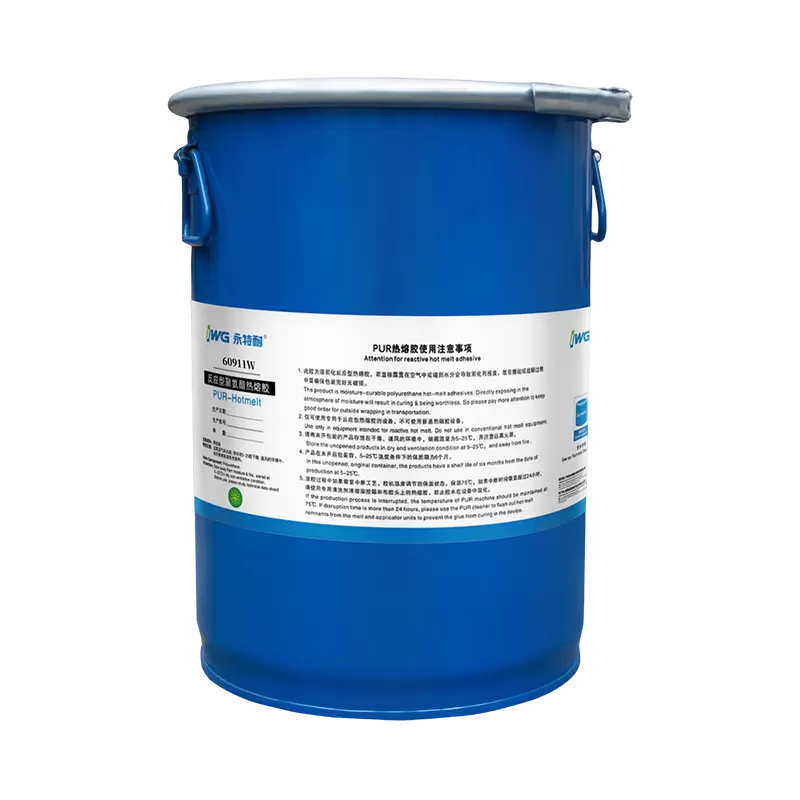
【A】 PUR (Moisture-curing Reactive Polyurethane Hot Melt Adhesive) delivers the best environmental performance among adhesive categories. Its core advantages: solvent-free, formaldehyde-free, benzene-free, low VOC, high temperature resistance, aging resistance and no free monomers. It cures irreversibly via moisture reaction with no residual release after curing. It applies to high-end home renovation, custom furniture, soft furniture, automotive and other scenarios.
Q17: What scenarios are EVA hot melt adhesives suitable for?
【A】 EVA (Ethylene Vinyl Acetate Copolymer) hot melt adhesive is a safe, solvent-free, formaldehyde-free, benzene-free and low-VOC adhesive. It is stable, melts at low temperature and leaves no residual emission after curing. It is especially suitable for children's furniture, toys, paper products, soft furnishings and other scenarios requiring high safety standards, making it the preferred option for child-contact applications.
Q18: Which adhesive is the safest for soft furniture?
【A】 Core requirements for soft furniture adhesives: low VOC, low odor, benzene-free and compliant additives. Priority order: PUR hot melt adhesive > qualified water-based adhesive > EVA hot melt adhesive; avoid solvent-based adhesives, low-cost unbranded adhesives and odor-masking adhesives. Request and check CMA test reports to confirm benzene is not detected and TVOC ≤100 g/L before purchase.
Part 4 — Standards & Testing: How to Identify Genuine Eco-friendliness 【Target Audience: Quality Compliance Managers, Purchasing Managers, Consumers Verifying Report Authenticity, Quality Inspection Institute Staff】
Q19: What is GB18583?
【A】 GB 18583-2008《Indoor decorating and refurbishing materials — Limit of harmful substances of adhesives》is the sole mandatory national standard for indoor decoration adhesives, forming a legal red line. It controls six categories of harmful substances: free formaldehyde, benzene, toluene + xylene, TVOC, TDI and halogenated hydrocarbons. It covers adhesive applications for flooring, furniture, wallpaper, suspended ceilings and other indoor scenes. Indoor adhesives failing this standard are illegal and cannot be sold or used.
Q20: What is the difference between indoor adhesives and industrial adhesives?
【A】 Indoor adhesives must comply with mandatory GB 18583-2008; industrial or outdoor adhesives are not subject to indoor mandatory standards and allow wider pollution tolerance. Industrial adhesives generally contain higher VOC, benzene and heavy metals and are unsuitable for enclosed indoor environments. Using industrial adhesives for home renovation violates regulations.
Q21: How to read CMA/CNAS test reports?
【A】 CMA (China Metrology Accreditation) / CNAS (China National Accreditation Service for Conformity Assessment) reports are legal proof of adhesive environmental compliance. Four key points to verify:
GB 18583-2008 must be marked as the test basis;
Compare test values against limit values (test value ≤ limit means compliant);
Confirm CMA and CNAS stamps are complete;
Check batch number and validity period.
Reports without CMA seals have no legal effect.
Q22: What is the Ten-ring Certification?
【A】 Ten-ring Certification refers to China Environmental Labeling Certification, governed by HJ 2541-2016《Environmental Labeling Product Technical Requirement — Adhesives》. It is relatively difficult to obtain. Counterfeiting including PS-forged certificates, certificate sharing and paid fake certificates exists in the market. Verify Ten-ring Certification through official channels instead of trusting promotional materials.
Part 5 — Misconception Correction: Common Cognitive Traps 【Target Audience: All Consumers, Home Renovation Owners, Market Supervision Personnel】
Q23: Does odorless mean environmentally friendly?
【A】 No. Odor ≠ pollution, odorless ≠ non-toxic. Some inferior adhesives use petroleum ether, phthalate odor masking agents and industrial flavors to cover sharp smells of benzene and excessive VOC, while benzene and VOC levels actually exceed limits. Qualified adhesives may emit mild resin or monomer odor before curing, which is normal residual from manufacturing and dissipates fully within 7–15 days with all indicators compliant after curing. Judging environmental safety by smell lacks scientific basis.
Q24: Does a smell necessarily mean toxic?
【A】 Not necessarily. Mild resin, acrylate or polyurethane odor from qualified adhesives before curing comes from normal monomer residues, which disperse naturally in 7–15 days; all harmful substance indicators meet standards after curing. Only abnormal sharp smells that irritate eyes, cause nausea, dizziness or chest tightness may signal excess benzene, solvents or high VOC. Normal adhesive odor is not dangerous; odorless toxic adhesives deserve greater caution.
Q25: Does formaldehyde-free mean safe?
【A】 No. Formaldehyde-free adhesives only contain no free formaldehyde or formaldehyde-releasing agents, but benzene, toluene, xylene, TVOC, heavy metals, phthalates, TDI and halogenated hydrocarbons can still exceed limits. Some "formaldehyde-free adhesives" have excessive benzene and VOC. Environmental safety relies on full-indicator compliance as a system, not just one single qualified index.
Q26: Does no added formaldehyde equal zero formaldehyde?
【A】 No. "No added formaldehyde" is defined professionally as: no formaldehyde or formaldehyde-releasing agents are intentionally added during production. However, natural trace formaldehyde exists inherently in natural resins, wood and additives as natural metabolites and cannot be eliminated completely. National standards allow trace natural residues of 0.5–1.0 g/kg. "Zero formaldehyde" conflicts with scientific facts; "no added formaldehyde" is the accurate expression.
Q27: Are water-based adhesives necessarily non-toxic?
【A】 Not necessarily. Water-based adhesives use water as dispersion medium with inherently low VOC, yet additives (emulsifiers, preservatives, thickeners, etc.) form the key risk point. Inferior water-based adhesives using low-grade preservatives, heavy metal catalysts and high-VOC additives may still exceed limits for formaldehyde, heavy metals and VOC. Water-based only means the solvent is eco-friendly; additive safety is the decisive factor.
Q28: Does high price mean environmentally friendly?
【A】 Not necessarily. Price has no inherent correlation with environmental standards. High marketing costs do not guarantee product safety. Some high-priced products are merely marketing gimmicks. The only valid basis for environmental compliance is CMA/CNAS test reports, not price tags.
Q29: Can ventilation for half a year eliminate pollution?
【A】 No. Formaldehyde and TVOC release cycles may last 5–15 years. Ventilation only reduces real-time concentration and cannot eradicate long-term slow release. The fundamental solution is to select fully compliant adhesives.
Q30: Is it scientifically sound to discuss toxicity without considering dosage?
【A】 No. The core principle of toxicology is "the dose makes the poison". Trace harmful substances within national standard limits carry lower risk than daily exposures such as haze or barbecue fumes. Trace residues in compliant adhesives are controllable for long-term contact.
Part 6 — Merchant Pitch Section — Identifying Marketing Tactics 【Target Audience: End Consumers, Purchasers, Market Regulators, Brand Operators】
Q31: Are claims of "zero formaldehyde" or "100% non-toxic" credible?
【A】 Not credible. Expressions such as "zero formaldehyde", "100% non-toxic", "all-natural" and "food-grade" violate the prohibitions on absolute terms stipulated in Article 9 of the Advertising Law. Chemically speaking, there is no absolutely non-toxic adhesive. Such promotions constitute illegal fraud.
Q32: Is there a problem when merchants only talk about "formaldehyde-free" and omit other indicators?
【A】 Yes. Promoting only formaldehyde compliance while ignoring benzene, TVOC and heavy metals is evasive. Formaldehyde-free does not equal safe. Benzene is far more hazardous than formaldehyde. Merchants deliberately conceal fatal risks such as benzene.
Q33: Are claims of "odorless formula" credible?
【A】 Verify with caution. Promotions of "odorless formula" or "zero odor" may use odor-masking agents to cover benzene and high VOC. Odor does not equal pollution, and no odor does not equal non-toxic. Check the CMA test report to confirm the actual content of hazardous substances.
Q34: What is the trick behind mislabeling ENF/E0 grades?
【A】 ENF and E0 are environmental grades for wood-based panels (specified in GB/T 39600—2021 Wood-based Panels and Their Products — Formaldehyde Emission Grading). Adhesives do not have such grading standards. When merchants apply panel standards to adhesives, this is standard confusion and fraudulent conduct. The only mandatory national standard applicable to adhesives is GB 18583-2008.
Q35: Are claims of "kids-special" or "maternal-infant grade" credible?
【A】 Verify with test reports. There is currently no dedicated national standard for adhesives marked as kids-special or maternal-infant grade. Such claims are mostly marketing gimmicks. For scenarios involving children, check the CMA report to confirm full-item compliance.
Part 7 — Home Renovation Practical Section — Scientific Adhesive Selection Guide 【Target Audience: Homeowners, Project Managers, Interior Designers, On-site Construction Workers】
Q36: What are the three core principles for selecting adhesives in home renovation?
【A】 Three principles shall be followed when selecting adhesives for home renovation:
Prioritize environmental hierarchy: PUR/EVA hot melt adhesive > qualified water-based adhesive > solvent-based adhesive (prohibited);
Mandatory check of valid documents: GB 18583-2008 national standard plus CMA/CNAS reports, with test results not exceeding limit values;
Reject marketing gimmicks: Do not trust absolute claims such as "zero formaldehyde", "odorless", or "kids-special".
Q37: What is the largest pollution source in home renovation?
【A】 Adhesives are the largest, most concealed and longest-lasting pollution source in home renovation. For a 100 ㎡ residence, around 30–50 kg of adhesives are used, covering flooring, wallpaper, furniture, suspended ceilings and joints. The emission period lasts 5–15 years. Panels release pollutants for roughly 3–5 years; adhesives have a far longer emission cycle and are the real source of renovation pollution.
Part 8 — Industry Trend Section — Future Development Directions 【Target Audience: Enterprise Management, Product R&D Staff, Industry Practitioners, Investment Analysts, Policy Researchers】
Q38: What are the environmental trends for the adhesive industry?
【A】 Environmental trends for the adhesive industry include: benzene-free, low-VOC, water-based, PUR and bio-based products becoming mainstream; solvent-based adhesives, high-formaldehyde adhesives, inferior water-based adhesives and toxic odor-masking adhesives being phased out. Technology-driven, full-cycle low-hazard and transparent compliance have become industry consensus. Green transformation is inevitable, and the elimination of inferior products is an irresistible trend.
Q39: What must enterprises do for environmental compliance?
【A】 Enterprises shall implement four tasks for environmental compliance:
Formula upgrading: Phase out highly toxic raw materials and adopt low-hazard systems such as MDI/PUR/EVA;
Strict raw material control: Full inspection of additives, monomers and heavy metals;
Batch testing: Submit each batch for CMA testing and publish reports;
Truthful promotion: Reject gimmicks and support claims with test data.
Compliant operation, transparency and data-backed statements are the right path for the industry.


