

















FAQ-PUR Hot Melt Adhesive Application Technology (PET Lamination, SPC Substrate, Winter and Summer Production Process Guidelines) - Common Questions
catalogue
1、 General product selection category [for procurement personnel, technical directors, and product development personnel]
2、 Seasonal classification of adhesive technology guidance [Production Manager, Process Engineer, Operator]
(1) Summer glue (ambient temperature above 30 ℃)
(2) Winter glue (ambient temperature below 15 ℃)
3、 Guidance on adhesive technology classified by substrate 【 Process engineers, technicians, production operators 】
(1) SPC substrate flat sticker
(2) PET flat sticker SPC
(3) Ocean board (solid wood composite board) veneer
(4) Conventional flat stickers (PET/triamine paper/CPL, etc.)
4、 Adhesive Selection Guide [Procurement, Technical Director, R&D, Process Engineer]
5、 Health and Storage Requirements [Production Manager, Process Engineer, Production Operator, R&D]
6、 Equipment configuration and operation category [for equipment engineers, production supervisors, and operators]
7、 Legal Statement [For all customers and partners]
1、 General product selection category [for procurement personnel, technical directors, and product development personnel]
Which PUR hot melt adhesive is recommended for PET flat adhesive SPC substrate?
When PET flat pasting SPC substrate, the corresponding model should be selected according to the substrate thickness and process requirements: SPC boards with a thickness of 1.2mm or more are recommended to use IWG 60605-27 or IWG 60605-77 PUR flat pasting adhesive; The flat pasting of wood veneer substrate can use the special adhesive of IWG 60605-31W model. 60605-26 adhesive is only suitable for flat pasting on substrates with wooden surfaces and is not suitable for SPC substrates. It is recommended to conduct sample testing before mass production to confirm compatibility before formal production.
What are the applicable ranges of different models of PUR hot melt adhesive?
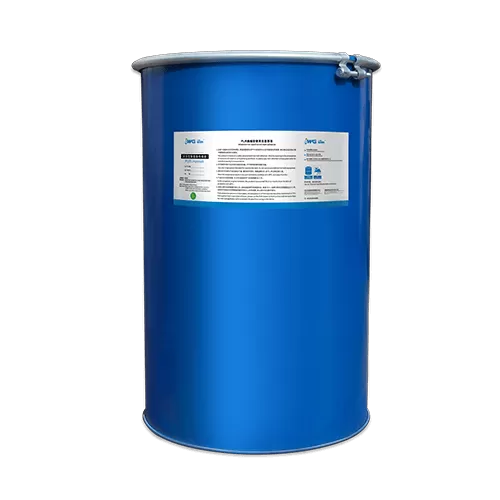
【 A2 】 IWG 60605-26 model: suitable for flat pasting on wooden substrates, not recommended for SPC substrates; IWG 60605-27 model: suitable for flat pasting of SPC boards with a thickness of 1.2mm or more, recommended for curing for more than 48 hours; IWG 60605-31W model: wood veneer special adhesive, suitable for flat pasting of special substrates such as SPC and ocean boards; IWG 60605-77 model: suitable for flat pasting of SPC boards with a thickness of 1.2mm or more, recommended for health preservation for more than 24 hours. Specific selection can be consulted with the technical personnel of the project team.
What are the packaging specifications for PUR hot melt adhesive samples in Q3?
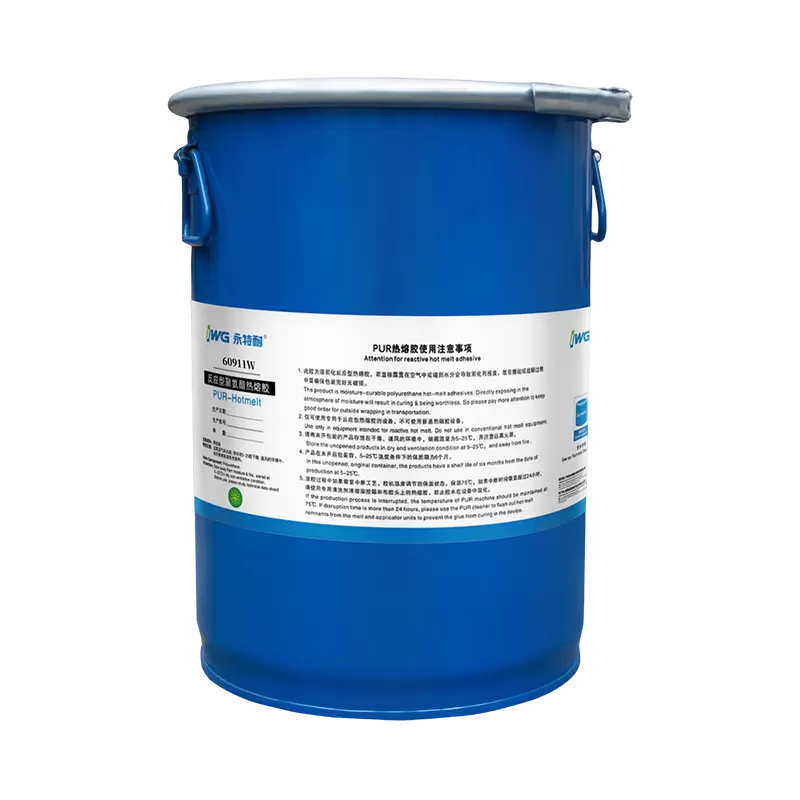
【 A3 】 For small batch testing and scattered order scenarios, IWG 60605-31W model sample adhesive provides two packaging specifications of 2KG and 30KG for customers to conduct process validation and small batch trial production. For bulk packaging specifications and ordering methods, please contact the corresponding regional sales or project team for consultation.
What are the effects of using mismatched adhesive models?
Using adhesive models that do not match the substrate may lead to quality issues such as insufficient bonding strength, delamination, and opening of the adhesive, affecting the final product quality and service life. The product quality issues caused by incorrect selection shall be borne by the user themselves. It is recommended to confirm the applicability of the adhesive model with the technical personnel before formal production.
What is the recommended yield rate for mass production of PET flat SPC thin sheets?
When mass producing PET flat SPC thin sheets, it is recommended to control the comprehensive material yield within the range of 6000-7000 square meters to ensure the uniformity of the adhesive layer coating and the quality of product bonding. When pasting 48 foot large boards in summer, it is recommended to control the comprehensive material yield at 1800-2000 sheets per barrel. The specific values need to be fine tuned according to actual production conditions.
2、 Seasonal classification of adhesive technology guidance [Production Manager, Process Engineer, Operator]
(1) Summer glue (ambient temperature above 30 ℃)
What should be noted in the production of PUR flat patches in summer?
In the high temperature environment of summer, the production of PUR flat stickers should focus on the following aspects:
1. Timely drying of the board: Control the temperature of the incoming board within 40 ℃ to avoid foaming caused by excessive board temperature.
2. Glue temperature control: The opening time is extended in summer, and the temperature of the glue solution in the glue tank should be controlled at around 120 ℃.
3. Material output rate: The comprehensive material output rate is controlled at 1800-2000 sheets per barrel (48 foot large boards).
4. Workshop environment: Turn on the air conditioning cooling and humidifier. The temperature requirement for PET production workshop and health room is not higher than 25 ℃, and the humidity is not lower than 60%.
5. Health preservation time: It is recommended to maintain a constant temperature workshop for at least 24 hours.
(2) Winter glue (ambient temperature below 15 ℃)
What should be noted in the production of PUR flat patches in winter?
Under low temperature conditions in winter, the opening time of PUR hot melt adhesive is significantly shortened, and the bonding strength is significantly affected. The following points should be noted:
1. Preheating of the board: Before applying glue to the board, it must be preheated by opening the board heating oven to heat the board to between 25-35 ℃.
2. Glue temperature adjustment: Increase the temperature of the glue solution by 5-10 ℃.
3. Glue application amount: Increase the glue application amount by 5-10g/square meter appropriately.
4. Workshop environment: Turn on the heating and humidification equipment in the workshop. The temperature requirement for PET production workshop and health room is above 18 ℃, and the humidity should not be lower than 60%.
5. Health preservation time: It is recommended to maintain health for at least 24 hours.
6. Plain board management: If conditions permit, plain boards can be placed in the production workshop in advance to avoid the impact of low temperatures.
3、 Guidance on adhesive technology classified by substrate 【 Process engineers, technicians, production operators 】
(1) SPC substrate flat sticker
What surface treatments are required before SPC substrate flat pasting?
【 A8 】 Surface treatment must be carried out before SPC substrate flat pasting to improve the affinity of the adhesive to the substrate:
1. Corona/plasma treatment: online corona or plasma treatment, instant veneer (treatment effect has time limitations).
2. Affinity agent coating: Batch production can install affinity agent devices on the production line for automatic coating; Scattered orders can be wiped with a cloth or sprayed with a corrosion-resistant sprayer for atomization. After coating, it needs to be quickly dried by drawing air.
3. Sanding treatment: SPC substrates with hard particles on the surface need to be lightly polished with a sanding machine to remove the particles. Do not sand heavily. If the high-density layer on the surface of the substrate is sanded off, it will seriously affect the strength effect after veneering.
How to deal with low surface density of SPC substrate?
For SPC with low surface density or situations where the veneer strength decreases due to heavy sand, suitable affinity agents can be used for surface treatment to restore strength. The selection of affinity agents is crucial, as improper selection can lead to low-temperature conjunctiva and affect the final strength. For specific selection, please consult our company.
What are the requirements for the yield and stacking of SPC thin plates after flat pasting?
When mass producing PET flat SPC thin sheets, it is recommended to have a material yield of 6000-7000 square meters. It is recommended that the thickness of the SPC sheet material should not be less than 15mm, and a face-to-face stacking method should be used to prevent indentation during transportation.
(2) PET flat sticker SPC
What are the special requirements for PET flat sticker SPC winter production?
When producing PET flat SPC in winter, in addition to following the surface treatment requirements of the SPC substrate mentioned above, attention should also be paid to:
1. Substrate treatment: Before SPC substrate flat pasting, a combination of corona discharge and affinity agent treatment is required, including online processing and instant pasting.
2. Sanding restriction: Surface sanding treatment is not recommended for SPC substrates. If there are hard particles on the surface, only gently remove the particles and do not use heavy sand.
3. Workshop environment: Turn on the heating and humidification equipment in the workshop. The temperature requirement for PET production workshop and health room is above 18 ℃, and the humidity should not be lower than 60%.
4. Health preservation time: It is recommended to maintain a constant temperature workshop for at least 24 hours.
(3) Ocean board (solid wood composite board) veneer
What should be paid attention to in the production of ocean board (solid wood board composite SPC) veneer?
【 A12 】 As the core board of the ocean board is solid wood board, the flatness of the double-sided composite SPC board surface will decrease. The production should follow the solid wood board flat pasting method:
1. Increase the amount of glue applied appropriately.
2. Adopt the pressing process of "light sweeping and heavy pressing".
(4) Conventional flat stickers (PET/triamine paper/CPL, etc.)
What general precautions should be taken when using regular PUR flat adhesive (non SPC substrate)?
[A13] Conventional flat pasting production requires adjusting process parameters according to seasonal temperature changes. The specific comparison is as follows:
Control item | Summer (above 30 ℃) | Winter (below 15 ℃) |
Gel temperature | Around 120 ℃ | Raise 5-10 ℃ |
glue application amount | Appropriately increase | Increase by 5-10g/square meter |
Plate temperature | The inlet temperature shall not exceed 40 ℃ | Preheat to 25-35 ℃ |
workshop temperature | Not higher than 25 ℃ | Not lower than 18 ℃ |
Workshop humidity | Not less than 60% | Not less than 60% |
Health preservation time | Not less than 24 hours | Not less than 24 hours |
4、 Adhesive Selection Guide [Procurement, Technical Director, R&D, Process Engineer]
How to choose PUR adhesive models for different substrates?
【 A14 】 The type of substrate determines the selection of adhesive, and incorrect use of adhesive may lead to adhesive failure:
Substrate type | Recommended adhesive model | Explanation |
SPC substrate (thickness ≥ 1.2mm) | IWG 60605-27 or IWG 60605-77 | IWG 60605-27 recommends maintaining health for at least 48 hours; IWG 60605-77 recommends staying healthy for at least 24 hours |
SPC substrate (wood veneer) | IWG 60605-31W | Specially designed for SPC flat stickers on wooden veneers |
Wooden substrate flat sticker | IWG 60605-26 | Only suitable for flat pasting on substrates with a wooden surface, not recommended for SPC substrates |
Special note: IWG 60605-26 is not recommended for SPC flat pasting process due to applicability issues. The company will not compensate for any customer complaints caused by this.
5、 Health and Storage Requirements [Production Manager, Process Engineer, Production Operator, R&D]
What are the requirements for the health preservation time and conditions of PUR flat patch products?
【 A15 】 Health preservation is a key step in ensuring adhesive strength, with specific requirements as follows:
Product/Adhesive Type | Health preservation time | curing condition |
Conventional flat sticker | Not less than 24 hours | Constant-temperature workshop |
IWG 60605-27 (SPC) | Not less than 48 hours | Constant-temperature workshop |
IWG 60605-77 (SPC) | Not less than 24 hours | Constant-temperature workshop |
PET production workshop/wellness room | - | Summer temperature should not exceed 25 ℃/humidity should not be lower than 60%; Winter temperature not lower than 18 ℃/humidity not lower than 60% |
6、 Equipment configuration and operation category [for equipment engineers, production supervisors, and operators]
How should SPC substrate surface treatment equipment be configured?
When mass producing SPC substrate flat stickers, it is recommended to purchase plate corona and affinity agent online treatment devices from equipment manufacturers to achieve continuous and automated surface treatment of substrates, ensuring the stability of treatment effects and production efficiency. Scattered orders can be supplemented by manual coating.
What auxiliary equipment is needed for winter production?
【 A17 】 It is recommended to equip the following auxiliary equipment for winter production: board heating and drying channel, used for preheating the board before gluing; Workshop heating equipment to maintain the temperature of the production environment; Humidification equipment to ensure relative humidity in the workshop; Constant temperature health room ensures a curing environment for products. The configuration of the above equipment helps to stabilize the quality of winter production.
What protective measures should operators take when using affinity agents?
When operating affinity agents, staff should take personal protective measures, wear gas masks and thick rubber gloves, and avoid direct skin contact and inhalation of volatile gases. The coating area should maintain good ventilation, and it is recommended to equip it with exhaust equipment to promptly discharge volatile gases.
7、 Legal Statement [For all customers and partners]
How to obtain professional technical support and selection consultation?
If you need technical support such as adhesive selection guidance, process parameter optimization, and problem troubleshooting, you can contact the sales liaison or project team technical personnel in each region. The company's technical team can provide targeted solutions and suggestions based on the specific substrate, process conditions, and quality requirements of customers.
Is process validation required before formal production?
【 A20 】 It is recommended to conduct sample testing or small-scale trial production before formal mass production to confirm the compatibility between the adhesive model, process parameters, and actual production conditions. Due to differences in production equipment, substrate conditions, and environmental conditions among customers, actual process parameters may need to be adjusted based on on-site conditions.
How is the scope of responsibility defined during product use?
The technical parameters and process recommendations provided in this guide are based on laboratory test data and long-term practical production experience, aiming to help users find suitable working methods. Due to the fact that the production conditions of end users are not within our control, we are unable to take responsibility for the work results affected by the production conditions of each user. In any case, it is recommended to determine appropriate production process parameters through experimentation before use.


