



















FAQ - Professional Q&A for all categories of hot melt adhesive
Table of Contents
I. Basic Understanding and Selection Guide for Hot Melt Adhesives
1.1 What is hot melt adhesive? What is its core working principle?
1.2 What are the core advantages of hot melt adhesives?
1.3 How to choose between hot melt adhesives and traditional liquid adhesives?
1.4 What are the components of hot melt adhesive? How do they affect performance?
1.5 What forms do hot melt adhesives come in? How to select them?
1.6 How to select hot melt adhesive colors (Transparent / White / Yellow)?
1.7 What are the safety and environmental characteristics of hot melt adhesives?
II. Detailed Explanation of Key Performance Parameters & Matching for Selection
2.1 What are the five core parameters for adhesive selection?
2.2 What is softening point? How does it affect high-temperature resistance?
2.3 What is melt viscosity? What is the difference between high and low viscosity?
2.4 What are open time and set time?
2.5 What is initial tack and final bond strength? What is the difference between them?
III. Comparison of Mainstream Adhesive Types: Characteristics & Application Scenarios
3.1 EVA Hot Melt Adhesive: Characteristics, Advantages and Limitations
3.2 APAO Hot Melt Adhesive: Why is it an ideal upgrade alternative to EVA?
3.3 PUR Hot Melt Adhesive: The mainstream choice for high-end bonding
3.4 PSA Pressure-Sensitive Adhesive & POE Eco-Adhesive: Analysis for Special Applications
3.5 Selection Guide for Comparison of Five Adhesive Types
IV. Common Bonding Failure Diagnosis & Solutions
4.1 Dispensing Process Issues (Stringing, Nozzle Clogging, Adhesive Overflow, etc.)
4.2 Bond Strength Issues (Debonding, Edge Lifting, False Bonding, etc.)
4.3 Adhesive Layer Appearance Issues (Bubbles, Hardening, Penetration, etc.)
4.4 Environmental and Aging Issues (Failure at High/Low Temperature, Poor Weather Resistance, etc.)
V. Typical Industry Application Solutions
5.1 Packaging Industry
5.2 Furniture Manufacturing Industry
5.3 Light Industry & Daily Commodity Industry
5.4 Electronics & Automotive Industry
I. Basic Understanding and Selection Guide for Hot Melt Adhesives 【Target Audience: Enterprise Decision-Makers, Production Managers, Purchasers, R&D Staff, Process Engineers, New Practitioners】
【Q】1.1 What is hot melt adhesive? What is its core working principle? (Application Scenarios: First contact with hot melt adhesives, or planning to replace existing adhesive solutions)
【A】 Hot melt adhesive is a 100% solid, solvent-free and moisture-free eco-friendly thermoplastic bonding material. Its working principle is a purely physical process:
Heating and Melting: Solid adhesive pellets / blocks are heated to molten state by a glue applicator to form flowable liquid adhesive.
Coating and Wetting: The molten adhesive is evenly applied onto the substrate surface and quickly penetrates into microscopic pores of the substrate to form intimate contact.
Cooling and Curing: The molten adhesive cools down naturally and solidifies rapidly. It locks the two substrate surfaces together via intermolecular forces to complete bonding.
No chemical reaction or air-drying is required throughout the process, which is the fundamental reason why it suits high-speed automated production lines.
【Q】1.2 What are the core advantages of hot melt adhesives? (Application Scenarios: Evaluating production line upgrade plans and comparing different adhesive solutions)
【A】 The widespread shift to hot melt adhesives in industrial mass production is mainly based on the following five core benefits:
Advantage Category | Details |
High Efficiency | It cools and sets instantly after lamination without drying time, seamlessly matching high-speed assembly lines and greatly boosting output per unit time. |
Environmental Compliance | All-solid formulation, free of formaldehyde, solvents and heavy metal volatiles. No wastewater or exhaust gas during production, easily passing environmental assessments and improving workshop conditions. |
Versatility | Good adhesion to paper, wood, foam, fabric and many plastics, reducing adhesive changeover frequency and simplifying material management. |
Cost-Effectiveness | No drying equipment or extra auxiliary materials required. Stable performance under ambient storage and transportation with almost no consumable waste, delivering lower overall costs. |
Convenience | Stable properties at room temperature. No special protection is needed for packaging, warehousing and logistics, which greatly reduces management workload and loss. |
【Q】1.3 How to choose between hot melt adhesives and traditional liquid adhesives? (Application Scenarios: Confirming product bonding process routes)
【A】 Below is a detailed comparison between hot melt adhesives and traditional liquid adhesives:
Comparison Item | Hot Melt Adhesive | Traditional Liquid Adhesive (e.g. water-based adhesive, solvent-based adhesive) |
Curing Mechanism | Physical cooling, instant setting | Chemical crosslinking or solvent evaporation, long drying time |
Line Efficiency | Extremely high, suitable for high-speed automated mass production | Low, requires long drying time and restricts throughput |
Bonding Quality | Smooth surface, bubble-free, odorless, high yield rate | Prone to shrinkage, bubbling and mildew, high risk of later debonding |
Environmental Performance | 100% solids, zero VOC, zero wastewater | Contains solvents or water, with VOC emissions or wastewater issues |
Typical Applications | Automated mass production, high efficiency & yield requirements, strict environmental regulations | Manual operation, small-batch custom orders, low-speed production |
Key Recommendation: For projects involving automated mass production, high yield requirements and environmental compliance, hot melt adhesive is the better option.
【Q】1.4 What are the components of hot melt adhesive? How do they affect performance? (Application Scenarios: Evaluating supplier adhesive quality and incoming material inspection)
【A】 The performance and quality of hot melt adhesives are determined by the ratio and purity of its four core components:
Base Resin (Backbone): Determines hardness, toughness and basic bonding strength. Adhesive grades such as EVA, APAO and PUR are named after their base resin.
Tackifying Resin (Core Functional Component): Provides tackiness, ensures the molten adhesive quickly grips substrates and prevents sliding or weak bonding.
Softening Oil (Modifier): Adjusts melt flow and colloidal toughness for smooth dispensing and non-brittle adhesive layer.
Antioxidant Stabilizer (Service Life Guarantee): Prevents oxidation, carbonization and yellowing during high-temperature melting and long-term use. It is critical for service life and stable mass production.
Quality Divide: Premium adhesives feature balanced formulation and pure raw materials; inferior adhesives contain high filler content, low active ingredients and poor stability.
【Q】1.5 What forms do hot melt adhesives come in? How to select them? (Application Scenarios: Matching existing dispensing equipment)
【A】 Three forms of hot melt adhesives and their applicable scenarios are shown below:
Form | Features | Application Scenarios |
Pellets | Widely used in industry. Uniform pellets, fast melting and low caking tendency. | Fully automatic and semi-automatic hot melt applicators, suitable for most industrial mass production scenarios. |
Blocks | Large weight, dense bulk adhesive. | Large-volume melters requiring high flow rate and long continuous dispensing without frequent refilling. |
Sticks | Easy and flexible replacement. | Handheld hot melt glue guns for small batches, sampling, manual bonding or repairing irregular parts. |
Selection Principle: Choose pellets or blocks for machine mass production; choose sticks for manual or temporary work.
【Q】1.6 How to select the color of hot melt adhesive (transparent / white / yellow)? 【Application Scenarios: Products with specific appearance requirements】
【A】Color is a balance between performance and appearance requirements. The selection details are as follows:
Adhesive Color | Performance Features & Application Scenarios |
Transparent Adhesive | Purified raw materials with clear appearance. Used for light-colored substrates, transparent materials or bonding of appearance parts; it does not show color and will not affect product appearance, with moderate mass production cost. |
White Adhesive | Good filling effect and strong hiding power. Used for bonding white or light-colored paper and boards; it can cover minor defects and features relatively low mass production cost. |
Yellow Adhesive | It usually contains higher tackifying resin content with better initial tack and toughness. Suitable for rough substrates, dark-colored products and scenarios requiring high bonding strength. |
Quick mnemonic: Choose transparent for high appearance requirements, white adhesive for light-colored substrates, yellow adhesive for high strength requirements.
【Q】1.7 What are the safety and environmental features of hot melt adhesives? 【Application Scenarios: Meet brand customer factory audit requirements and ensure product compliance】
【A】Industrial-grade hot melt adhesive is the preferred option for compliant workshops and clean production. Its environmental safety advantages are as follows:
Clean raw material source: Formaldehyde-free, solvent-free, heavy metal-free; no toxic volatile substances during production or in finished products.
High-level compliance: Complies with strict environmental standards for food contact, maternal and infant products, and can be safely used for packaging of personal daily necessities.
Workshop-friendly: Low odor and non-irritating under standard temperature control, significantly better than traditional adhesives or paints, suitable for clean workshops.
II. Detailed Introduction of Key Performance Parameters & Matching Selection 【Target Audience: Production Supervisors, R&D, Process Engineers, Quality and Purchasing Staff】
【Q】2.1 What are the five core parameters for adhesive selection? 【Application Scenarios: Accurate selection and establishment of incoming inspection standards】
【A】Selection cannot rely on experience alone; the following five parameters shall be followed, which can solve 90% of selection issues:
Softening Point (Temperature Resistance): The critical temperature at which the adhesive starts to soften under heat, determining its high-temperature resistance.
Melt Viscosity (Fluidity): Reflects the thickness of molten adhesive and determines application effect and process adaptability. High viscosity means thicker adhesive with stronger support; low viscosity means thinner adhesive for smoother dispensing.
Initial Tack & Final Bond Strength (Bonding Performance): Initial tack determines positioning speed on production lines; final bond strength determines long-term product reliability.
Open Time (Operation Window): The available time for effective bonding after coating, determining matching production line speed.
Temperature Resistance Range (Environmental Adaptability): The ambient temperature range in which the adhesive can work stably for a long time.
【Q】2.2 What is softening point? How does it affect high-temperature resistance? 【Application Scenarios: Solve delamination issues under summer or high-temperature working conditions】
【A】Softening point is the core indicator for evaluating the heat resistance of hot melt adhesive, referring to the critical temperature at which the adhesive layer begins to soften, lose tack and collapse under heat.
Low softening point adhesive (e.g. conventional EVA, approx. 60-70℃): Prone to softening and shifting when workshop temperature is high in summer or products are stacked in enclosed spaces, resulting in delamination.
High softening point adhesive (e.g. high-temperature resistant EVA, APAO, PUR): Maintains stable shape under high temperature, suitable for summer production, enclosed storage and products with heat resistance requirements.
Selection suggestion: Conventional adhesives are acceptable for normal temperature environments; special high softening point adhesives must be used for high-temperature working conditions.
【Q】2.3 What is melt viscosity? What is the difference between high and low viscosity? 【Application Scenarios: Matching application processes (spray coating, dot dispensing, roll coating)】
【A】Melt viscosity reflects the fluidity and consistency of hot melt adhesive in molten state.
High-viscosity adhesive (thick adhesive): Low fluidity but strong support and thick adhesive layer. Suitable for gap filling, structural shaping and compression support.
Low-viscosity adhesive (thin adhesive): Excellent fluidity, strong penetration and uniform coating. Suitable for high-speed spray coating, precision dot dispensing and thin coating processes; less stringing and nozzle clogging, delivering smoother product surface.
Selection principle: Choose high viscosity for shaping and support; choose low viscosity for high-speed thin coating.
【Q】2.4 What are open time and curing time? 【Application Scenarios: Match production line tact time and solve poor lamination issues】
【A】These two parameters directly determine the matching degree between adhesive and production line:
Open time: The maximum allowable operation time after adhesive coating for effective wetting and bonding on substrates.
Ø Too short: Skin forms on adhesive surface and loses tack, causing "false bonding" which falls off easily upon touch.
Ø Too long: Slow cooling of adhesive layer, easily causing product shifting, collapse or adhesive overflow.
Curing time: The time after lamination for the adhesive layer to fully cool, set and reach strength for stacking and subsequent processes.
Ø Faster curing means higher production capacity.
Ø Slow curing reserves more time for fine alignment, suitable for precision or irregular parts.
Core matching logic: High-speed production lines adopt short open time / fast curing adhesives; manual or low-speed lines adopt long open time / slow curing adhesives.
【Q】2.5 What are initial tack and final bond strength? What is the difference between them?
【A】These two easily confused concepts are extremely important:
Initial tack: The gripping force the adhesive generates right after lamination before full cooling. It quickly fixes products on production lines to prevent slipping, edge warping and misalignment.
Final bond strength: The ultimate bonding strength after the adhesive fully cools and sets. It determines whether products remain firmly bonded during long-term storage, transportation and usage.
Simple understanding: Initial tack controls "no shifting right now"; final bond strength controls "no delamination in the long run".
Selection logic: High-speed production lines require high initial tack; durable products require high final bond strength. Premium adhesives balance both properties.
III. Comparison of Main Adhesive Types, Features and Application Scenarios 【Target Audience: Enterprise Decision-Makers, Purchasers, Process Engineers】
【Q】3.1 EVA Hot Melt Adhesive: Features, Advantages and Limitations? 【Application Scenarios: Basic bonding needs with priority on cost performance】
【A】Detailed features of EVA hot melt adhesive are as follows:
Position: General-purpose hot melt adhesive with huge industrial consumption and excellent cost performance.
Advantages: Ultra-low cost, stable melting point, good fluidity, fast curing, non-toxic and low odor. Excellent bonding effect on porous materials such as paper, wood and fibers.
Core Limitations:
Poor temperature resistance: Conventional EVA softens at 65-70℃ and tends to turn brittle in low-temperature environments. This is its major weakness.
Limited bonding substrates: Barely adheres to low-surface-energy materials such as smooth PP/PE, glass and metal.
【Q】3.2 APAO Hot Melt Adhesive: Why is it an ideal upgrade alternative to EVA? 【Application Scenarios: Solve poor weather resistance and brittle cracking of EVA】
【A】With outstanding weather resistance and flexibility, APAO hot melt adhesive compensates for the performance shortcomings of EVA:
Performance Comparison | APAO Hot Melt Adhesive | EVA Hot Melt Adhesive |
Low-Temperature Toughness | Remains flexible without cracking at -30℃ | Easily hardens and turns brittle at low temperature, prone to cracking and peeling |
High-Temperature Resistance | Not easy to soften and collapse under high temperature | Softens and fails at approx. 65-70℃ |
Fatigue Resistance | Excellent, resistant to repeated bending and vibration | Average, prone to fatigue cracking |
Waterproof & Moisture Resistance | Excellent, not easy to absorb water and delaminate | Average, performance degrades in humid environments |
Durability | Anti-aging, stable for long-term use | Prone to aging, yellowing and delamination |
Application Summary: EVA is suitable for mass production under constant indoor temperature; APAO is an ideal upgrade solution for scenarios involving low temperature, vibration, flexible materials or higher durability requirements.
【Q】3.3 PUR Hot Melt Adhesive: Mainstream Option for High-End Bonding 【Application Scenarios: High-end products, long-term fixation and severe environmental applications】
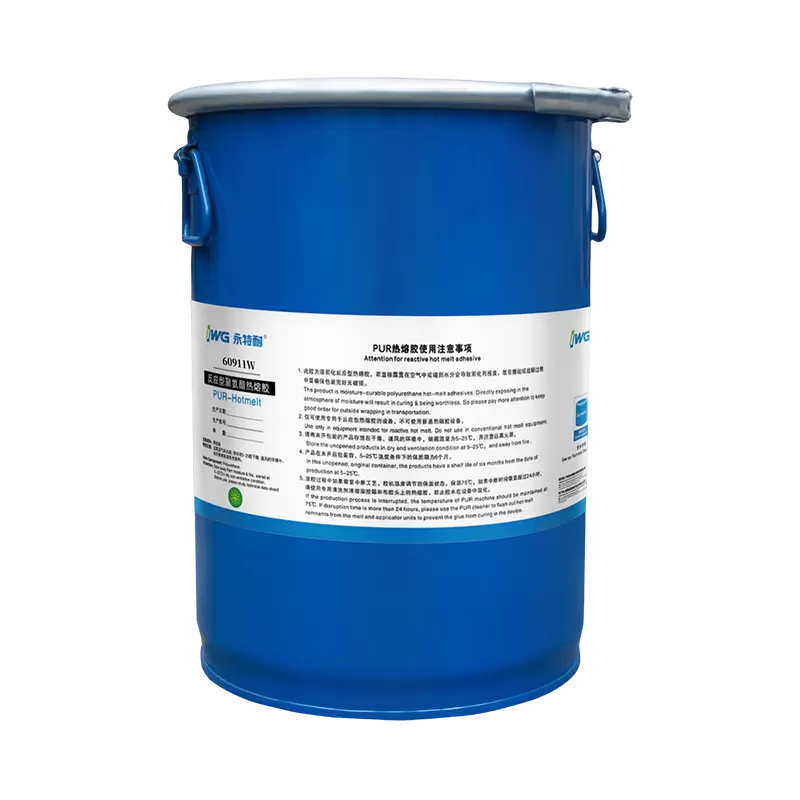
【A】PUR (Moisture-Curable Reactive Polyurethane Hot Melt Adhesive) represents the cutting-edge technology of hot melt adhesives:
Core Feature: Unlike physical curing of EVA and APAO, PUR cures through chemical reaction with moisture; the reaction is irreversible and the cured adhesive will not remelt upon heating.
Performance Advantages:
l Wider temperature resistance range: Stable performance from -40℃ to 120℃.
l Superior waterproof and moisture resistance: Dense cured adhesive layer, non-water-absorbing.
l Stronger aging resistance: UV-resistant and antioxidant, no failure for a long time.
l High bonding strength: Excellent adhesion to many difficult-to-bond materials.
Usage Taboo: Extremely sensitive to moisture. It must be tightly sealed before use; premature curing and failure will occur once exposed to air moisture. Cured adhesive cannot be remelted again, and pipelines need standardized cleaning during adhesive replacement.
【Q】3.4 PSA Pressure-Sensitive Adhesive & POE Eco-Adhesive: Analysis of Special Scenarios 【Application Scenarios: Specific product bonding requirements (e.g. labels, high-environmental products)】
【A】Detailed features of PSA pressure-sensitive adhesive and POE eco-adhesive are as follows:
PSA Pressure-Sensitive Adhesive:
l Definition: A type of hot melt adhesive that maintains long-lasting tack.
l Features: No heating or heavy pressing required; bonds with light pressure, remains flexible and leaves no residual adhesive.
l Application: Special adhesive for coating production of self-adhesive labels, stickers, tapes and protective films.
POE Eco-Adhesive:
l Definition: New-generation eco-friendly polyolefin hot melt adhesive.
l Features: Ultra-low odor, no harmful substance precipitation, high environmental grade, pure and impurity-free adhesive body, combining high strength, high & low temperature resistance and aging resistance.
l Application: Scenarios requiring high environmental standards and low odor, such as maternal and infant products, high-end daily necessities and clean workshops.
【Q】3.5 Comparison & Selection Guide for Five Adhesive Types? 【Application Scenarios: Overall selection decision and establishment of adhesive selection standards】
【A】The comparison of five adhesive types is shown below:
Adhesive Type | Core Advantages | Typical Application Scenarios | Selection Keywords |
EVA | High cost performance, wide versatility | Ordinary cartons, color boxes, book binding | Normal temperature, mass production, low cost |
APAO | Cold resistance, flexibility, vibration resistance, weather resistance | Cold chain packaging, foam lamination, soft furniture | Low temperature, flexibility, durability |
PUR | Superior weather resistance, waterproofing, long-term bonding | High-end furniture, automotive interior, electronic sealing | High-end, long service life, severe environment |
PSA | Long-lasting tack, easy operation, no residual adhesive | Self-adhesive labels, double-sided tapes, adhesive films | Light pressure, label, coating |
POE | Ultra-low odor, high environmental performance, high purity | Maternal and infant products, clean workshops, high-end daily necessities | Eco-friendly, clean, odorless |
IV. Common Bonding Fault Diagnosis & Solutions 【Target Audience: Production Managers, R&D, Quality, Process Engineers, Equipment Operators】
4.1 Coating Process Issues (Stringing, Nozzle Clogging, Adhesive Overflow, etc.)
【Q】4.1.1 How to solve frequent stringing during coating which contaminates products?
【A】Three core causes and solutions for stringing:
Cause | Solution |
Low temperature: Adhesive is not fully melted with excessive viscosity | Gradually increase melting temperature (5-10℃ per step) |
Improper equipment parameters: Insufficient suck-back pressure or slow cut-off speed | Raise equipment suck-back parameter or cut-off speed |
Dirty nozzle: Carbon deposits on nozzle alter adhesive outlet shape | Clean or replace nozzle regularly |
【Q】4.1.2 How to prevent frequent clogging of nozzles and filters on production lines?
【A】Three core causes and preventive measures for clogging:
Cause | Solution |
High-temperature carbonization: Long-time high-temperature or over-temperature holding causes adhesive aging and black carbon deposits | Strictly control melting temperature and avoid overheating |
Adhesive mixing contamination: Mixing old and new adhesives or different brands leads to incompatibility and gelation | Fully empty the tank and pipelines before adhesive replacement; mixing is prohibited |
Lack of daily maintenance: Filters are not replaced for a long time with accumulated impurities | Establish standard operating procedures for regular filter replacement, tank and nozzle cleaning |
【Q】4.1.3 How to handle severe adhesive overflow and uneven adhesive thickness after product lamination?
【A】Three core causes and solutions for overflow and uneven adhesive layer:
Cause | Solution |
Excessive output flow: Adhesive volume per unit time exceeds demand | Reduce equipment output parameters |
Excessive lamination pressure: Surplus adhesive is squeezed out | Lower roller pressure or adjust lamination gap |
Mismatched curing speed: Slow curing leads to continuous adhesive flow | Check whether adhesive curing speed matches production line tact time, or moderately lower coating temperature to accelerate setting |
4.2 Bonding Strength Issues (Delamination, Edge Warping, False Bonding, etc.)
【Q】4.2.1 What is the root cause of "false bonding" (appears bonded but falls off easily upon touch)?
【A】False bonding occurs when adhesive fails to wet the substrate and only rests on the surface. Three core causes and solutions:
Cause | Solution |
Insufficient temperature: Poor fluidity prevents adhesive from penetrating substrate micro-pores | Verify and adjust to the melting temperature recommended for the adhesive grade |
Contaminated substrate: Dust, oil or release agent forms an isolation layer | Ensure substrate surface is clean and dry before coating |
Delayed lamination: Adhesive surface has skinned and lost tack | Check open time and complete lamination within valid time window |
【Q】4.2.2 The middle part is firmly bonded but edges and corners warp. What is the reason?
【A】Three core causes and solutions for edge and corner warping:
Cause | Solution |
Edge glue shortage: Glue dispensing path does not cover the edge or glue volume is insufficient at the edge | Optimize the glue dispensing path to ensure sufficient glue at the edge |
Uneven pressure: The pressing equipment bears more force in the middle and less force at the edge, resulting in weak bonding | Adjust the pressing equipment to ensure uniform pressure on the worktable |
Fast cooling at edges: Glue at the edge cures prematurely due to rapid heat dissipation | Apply supplementary glue to edges or complete lamination quickly within the effective open time |
【Q】4.2.3 The glue has good initial tack, but debonding occurs after storage (insufficient final bond strength). How to handle it?
【A】Three core causes and solutions for insufficient final bond strength:
Cause | Solution |
Adhesive inherent property: Some adhesives are designed for high initial tack with low bulk strength | Re-evaluate adhesive selection and choose structural adhesives or grades with higher bulk strength |
Insufficient glue spread: Too thin glue layer cannot form a high-strength adhesive film | Appropriately increase glue spread amount |
Glue penetration into substrate: For porous substrates, excessive glue penetration leaves insufficient glue on the surface | Increase adhesive viscosity or increase glue spread amount appropriately |
4.3 Adhesive Layer Appearance Issues (Bubbles, Hardening, Penetration, etc.)
【Q】4.3.1 How to solve bubbles or voids inside the adhesive layer?
【A】Three core causes and solutions for bubbles and voids:
Cause | Solution |
Air entrapment during dispensing: Air is trapped during spraying or scraping; fast lamination prevents air release | Reduce dispensing speed; laminate from center to edges to expel air |
Damp substrate: Moisture vaporizes when contacting hot adhesive | Ensure the substrate is fully dried before dispensing |
Insufficient glue spread: Discontinuous glue layer leads to voids | Maintain continuous and full coverage of the adhesive layer |
【Q】4.3.2 Why does the bonded product become hard, brittle or cause substrate deformation after bonding?
【A】Three core causes and solutions for hard and brittle adhesive layer:
Cause | Solution |
Mismatched adhesive type: Hard adhesive used for flexible materials (e.g. foam, fabric) | High-toughness, high-VA EVA or APAO adhesive must be selected for flexible materials |
Excessively thick adhesive layer: Adhesive accumulation turns rigid after curing | Reduce adhesive thickness to achieve "thin yet compact coating" |
Excessively high application temperature: Adhesive carbonizes and ages, losing toughness | Apply strictly at the temperature recommended for the adhesive grade |
【Q】4.3.3 How to prevent adhesive strike-through which contaminates thin paper or fabric?
【A】Three core causes and solutions for strike-through and bleeding:
Cause | Solution |
Overly fluid adhesive: Low-viscosity high-melt-index adhesive easily penetrates porous substrates | Switch to hot melt adhesive with low melt index and high viscosity |
Excessively high application temperature: Higher temperature increases fluidity | Appropriately lower application temperature while maintaining bonding strength |
Excessive adhesive coating weight | Precisely control coating weight; adopt "thin coating in multiple passes" for porous materials |
4.4 Environmental and Aging Issues (High/Low Temperature Failure, Poor Weather Resistance, etc.)
【Q】4.4.1 How to address cracking and delamination of products in winter or low-temperature environments?
【A】Three core causes and solutions for low-temperature brittle failure in winter:
Cause | Solution |
Adhesive limitation: Conventional EVA becomes brittle at low temperatures by material nature | Replace with cold-resistant EVA or higher-grade APAO hot melt adhesive |
Over-cooled substrate: Adhesive cools rapidly with insufficient wetting | Raise melting temperature moderately (5–10℃) |
Insufficient operation time: Effective open time is greatly shortened | Shorten the interval between coating and pressing, or select adhesive with longer open time |
【Q】4.4.2 How to solve softening and delamination under high summer temperature or enclosed storage?
【A】Three core causes and solutions for high-temperature delamination in summer:
Cause | Solution |
Insufficient heat resistance: Softening point lower than ambient temperature | Switch to high-temperature-resistant EVA, APAO or PUR |
Poor heat dissipation: Dense stacking causes heat accumulation | Store finished goods in separate zones with adequate ventilation |
Unadjusted process: Winter parameters lead to slow curing | Appropriately lower melting temperature in summer to accelerate curing and reduce overflow |
【Q】4.4.3 What causes yellowing, delamination and chalking after long-term storage?
【A】Three core causes and solutions for aging failure:
Cause | Solution |
Low-grade adhesive: High filler content and insufficient antioxidant | Select premium adhesives made from virgin raw materials with sufficient antioxidants |
Harsh storage: Direct sunlight, high heat and humidity accelerate aging | Store finished products away from light, in cool and dry conditions |
Over-temperature during application: Latent carbonization during production speeds up later aging | Strictly control temperature throughout production |
V. Typical Industry Application Solutions
5.1 Packaging Industry 【Target Audience: Packaging Factory Production Managers, Process Engineers, Purchasers】
【Q】How to select hot melt adhesives for different sub-scenarios in the packaging industry?
【A】Recommended solutions for each scenario in the packaging industry are as follows:
Application Scenario | Recommended Adhesive & Solution | Key Requirements |
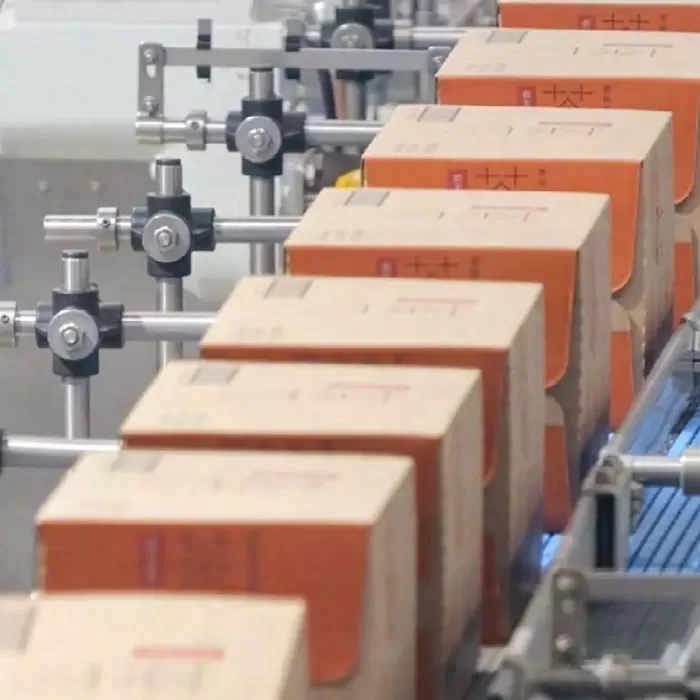
High-speed Carton Sealing | Standard EVA Hot Melt Adhesive with High Melt Index & Fast Set | Low cost, fast setting, no production line delay |
Food / Cosmetic Folding Carton Gluing | High VA Flexible EVA Hot Melt Adhesive | Flexible adhesive layer, no cracking or lifting upon bending |
Cold Chain / Frozen Packaging | Cold-resistant APAO Hot Melt Adhesive | Remains flexible at -30℃, no brittleness or delamination |
EPE Foam / Bubble Bag / Foam Packaging | High-toughness APAO or Flexible EVA | Soft adhesive, deforms with substrate, no piercing |
Paper Tube / Paper Edge Protector Fixing | Low VA Rigid EVA Hot Melt Adhesive | High hardness, fast setting, strong supporting force |
Food-contact Packaging | Food-grade Compliant Hot Melt Adhesive | Safe and non-toxic, no migration, passed relevant tests |
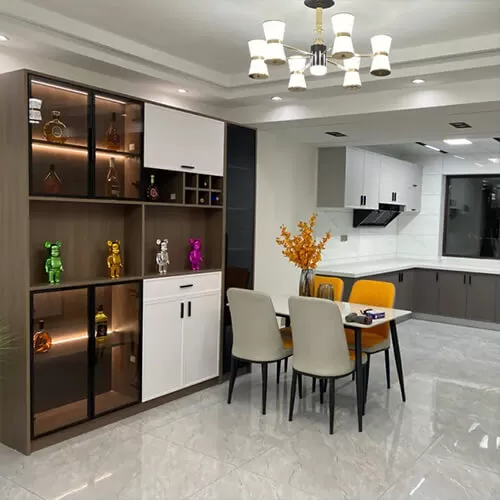
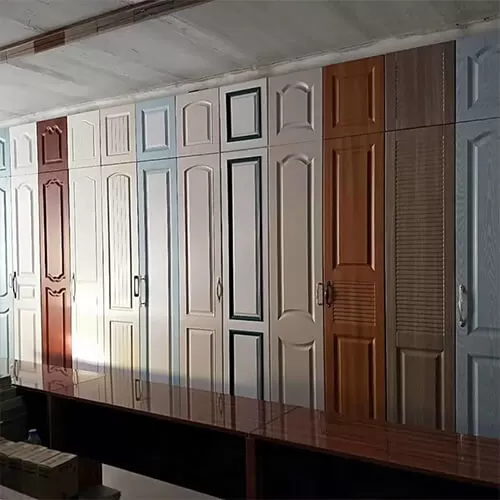
5.2 Furniture Manufacturing Industry 【Target Audience: Furniture Factory Production Managers, Process Engineers, Purchasers】
【Q】How to select hot melt adhesives for different sub-scenarios in furniture manufacturing?
【A】Recommended solutions for each scenario in furniture manufacturing are as follows:
Application Scenario | Recommended Adhesive & Solution | Key Requirements |
Straight Edge Banding for Panel Furniture | EVA Edge Banding Hot Melt Adhesive | Cost-effective, uniform coating, fast lamination |
High-end / PUR Invisible Edge Banding | PUR Hot Melt Adhesive | Zero glue line, waterproof and heat-resistant, long-term bonding |
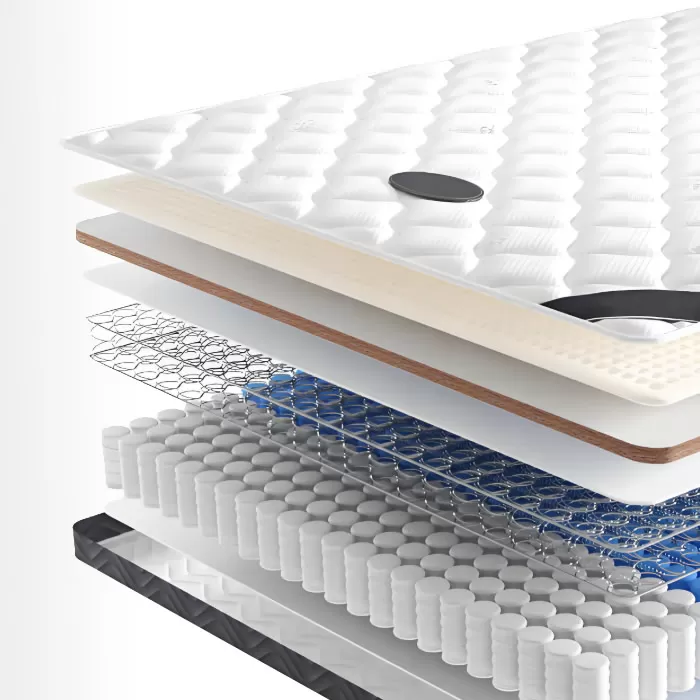
Upholstered Sofa / Mattress / Fabric Sponge | High-toughness APAO Hot Melt Adhesive | Soft without hardening, resistant to repeated bending, durable |
Bamboo-Wood Fiber Integrated Wall Panel | High-adhesion Modified EVA or APAO | Strong adhesion, prevents hollowing and falling off |
5.3 Light Industry & Daily Necessities Industry 【Target Audience: Light Industry Manufacturer Production Managers, Process Engineers, Purchasers】
【Q】How to select hot melt adhesives for different sub-scenarios in light industry and daily necessities industry?
【A】Recommended solutions for each scenario in light industry and daily necessities industry are as follows:
Application Scenario | Recommended Adhesive & Solution | Key Requirements |
Self-adhesive Label / Labeling | PSA Pressure Sensitive Adhesive | Long-lasting tack, bonds under light pressure, no residue |
Non-woven / Fiber Fabric Lamination | High-flexibility EVA or APAO | Thin coating lamination, preserves soft fabric hand feel |
Multi-layer Mattress Lamination (Sponge / Coir Mattress) | Modified APAO Hot Melt Adhesive | No collapse under compression, no delamination after long use |
High-end Daily Necessities / Baby & Maternity Products | POE Eco-friendly Hot Melt Adhesive | Ultra-low odor, high purity, safe and compliant |
5.4 Electronics & Automotive Industry 【Target Audience: Electronics / Auto Parts Factory Production Managers, Process Engineers, Purchasers】
【Q】How to select hot melt adhesives for different sub-scenarios in electronics and automotive industry?
【A】Recommended solutions for each scenario in electronics and automotive industry are as follows:
Application Scenario | Recommended Adhesive & Solution | Key Requirements |
Electronic Accessories / Foam / Dust-proof Tape | High-purity EVA or Low-odor POE | Low odor, non-corrosive, no whitening |
Automotive Interior / Headliner / Floor Mat | High-toughness APAO or PUR | Heat-resistant, shock-resistant, weather-resistant, stable under dynamic conditions |
Precision Small Component Bonding | Long open time, slow-set adhesive | Micro-dispensing, precise alignment, no adhesive overflow |
This guide is compiled based on general industry technical standards. For final adhesive selection and process parameters, testing and verification are recommended according to your actual production line conditions. For further technical support, please contact the [IWG] Technical Team.
Revision Date: August 24, 2026


