
















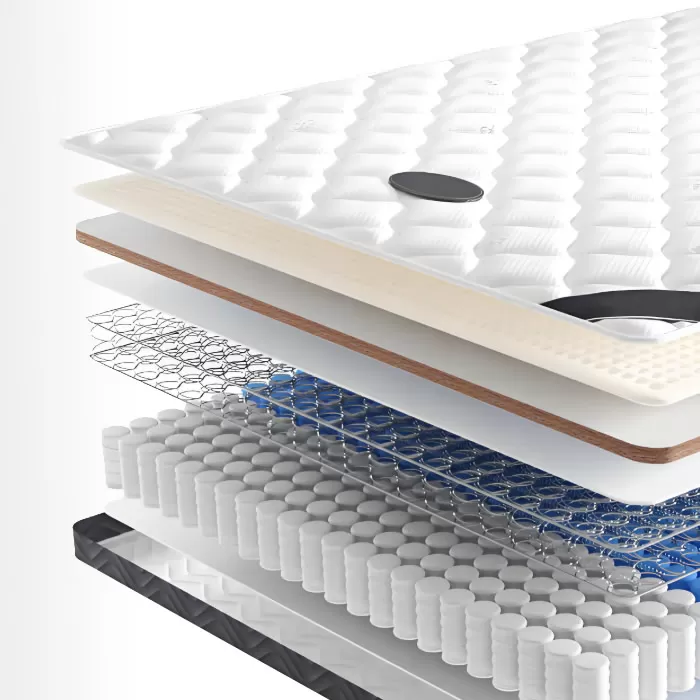




FAQ - Mattress Comfort Layer Composite Process Software Adhesive Solution - Common Problems
Table of Contents
I. Product Selection & Application Scenarios (Audience: Purchase Decision-Makers, Production Supervisors, Process Engineers) — Q1~Q5
II. Process Operation & Parameter Setting (Audience: Production Operators, Process Technicians) — Q6~Q10
III. Common Problems & Solutions (Audience: Production Operators, Equipment Maintenance Personnel, Quality Management Personnel) — Q11~Q15
IV. Material and Bonding Compatibility (Audience: Process Engineers, R&D Staff, Quality Inspectors) — Q16~Q18
I. Product Selection & Application Scenarios (Audience: Purchase Decision-Makers, Production Supervisors, Process Engineers)
【Q1】What product models of hot melt adhesives do you supply for mattress comfort layer lamination? What seasons and scenarios are they suitable for respectively?
【A1】We offer multiple hot melt adhesive grades for mattress comfort layer lamination, which can be selected according to production seasons and process requirements:
Model | Type | Recommended Ambient Temperature | Application Scenarios | Main Features |
HM8600W | PSA | 0~30℃ | Autumn & Winter Production | Good low-temperature performance and high bonding strength |
HM8600 | PSA | 15~40℃ | Normal Seasons | Good initial tack and weather resistance |
HM8602 | PSA | 15~40℃ | Summer Production | Good initial tack and weather resistance |
HM150A | APAO | 20~40℃ | Manual Spraying | Excellent noise reduction and high bonding strength |
HM150AA | APAO | 20~40℃ | Manual Spraying, Foam Edge Wrapping | Good noise reduction, favorable initial bond strength and longer open time |
HM150-1A | APAO | 10~40℃ | Manual / Automatic Spraying | Good noise reduction and longer open time |
HM150D | APAO | 0~40℃ | Manual / Automatic Spraying | Good noise reduction, high bonding strength and long open time |
The operating temperature for all grades is 150~180℃. The viscosity at 180℃ is 2000±1000 cps (APAO series: 2000±500 cps).
【Q2】What is the difference between APAO series and conventional hot melt adhesives? Why are they recommended for mattress comfort layer lamination?
【A2】Compared with traditional EVA hot melt adhesives, APAO (Amorphous Poly-Alpha-Olefin) hot melt adhesives have the following advantages in mattress lamination:
Excellent noise reduction: The cured adhesive layer is flexible, which can reduce squeaking noises during mattress use;
Low odor: Complies with environmental requirements and helps control odor in production and finished mattresses;
Good compatibility with various substrates: Suitable for bonding foam, PK cotton, non-woven fabric and other comfort-layer materials.
Our APAO series adopts atactic polyolefin as the main component, featuring reliable bonding performance, environmental friendliness and good aging resistance.
【Q3】How to select the proper adhesive according to production seasons?
【A3】Selection is suggested based on workshop ambient temperature:
Winter (0~15℃) : HM8600W PSA or HM150D is recommended; they maintain good processability and bonding strength at low temperatures;
Spring & Autumn (15~30℃) : HM8600 PSA or HM8602 PSA is recommended for balanced overall performance;
Summer (30~40℃) : HM8602 PSA is recommended, with good weather resistance and stable performance under high temperatures.
In addition, the glue machine temperature should be adjusted seasonally: generally, the winter operating temperature shall be 10~20℃ higher than that in summer.
【Q4】Are these products compatible with both automatic spraying and manual spraying processes?
【A4】Yes. All our grades support both automatic and manual spraying:
HM8600W PSA, HM8600 PSA, HM8602 PSA: Suitable for automatic and manual spraying;
HM150A: Suitable for manual spraying only;
HM150AA, HM150-1A, HM150D: Suitable for manual and automatic spraying.
Final selection depends on production line equipment and process requirements.
【Q5】Do the products meet environmental and safety standards?
【A5】Our hot melt adhesives are solvent-free, which reduces VOC emissions from the source. They can meet international environmental requirements such as REACH and RoHS. Relevant industry standards include HG/T 3660 (Test method for melt viscosity of hot melt adhesives), GB 18580 and QB/T 1952.2. Please contact our sales representative for test reports.
II. Process Operation & Parameter Setting (Audience: Production Operators, Process Technicians)
【Q6】What are the recommended process parameters for hot melt equipment?
【A6】Recommended parameters are as follows:
Parameter Item | Recommended Setting | Remarks |
Melter Tank Temperature | 150~180℃ | Adjust appropriately according to weather |
Hose Temperature | 150~180℃ | Set in coordination with tank temperature |
Nozzle Temperature | 150~180℃ | Set in coordination with tank temperature |
Pump Pressure | 0.4~0.6MPa | Adjust based on materials |
Coating Weight | ≥20g/m² | Increase appropriately for porous materials |
Adjust temperature by approx. 5℃ each time, and check spraying effect after 15~20 minutes until optimal performance is achieved.
【Q7】What are the differences in coating weight for different materials?
【A7】Coating weight shall be adjusted according to substrate characteristics:
For porous substrates such as foam, increase coating weight or adopt double-sided spraying;
Higher coating weight is recommended for special materials like 3D mesh;
APAO adhesives have relatively short open time; increase coating weight at low temperatures to guarantee bonding results.
【Q8】What are the differences in adhesive state between automatic spraying and manual spraying?
【A8】The atomization patterns differ between the two spraying methods:
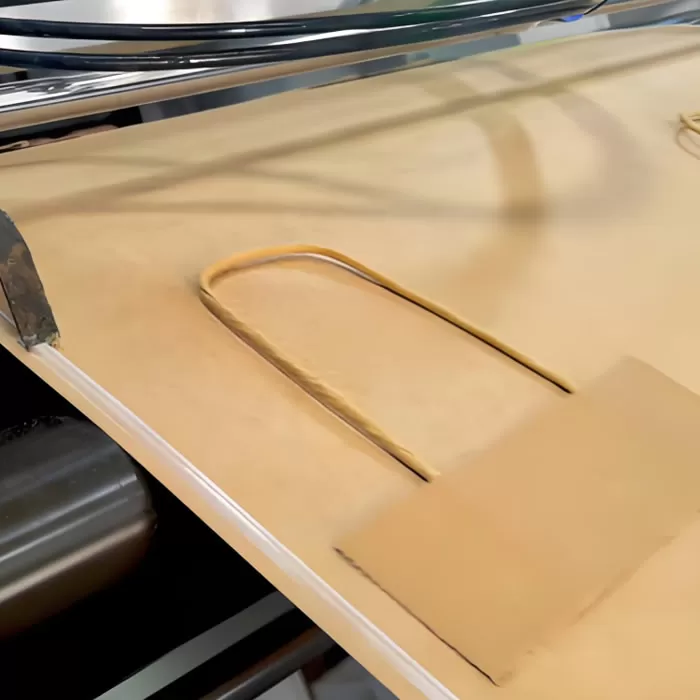
Manual Spraying: Adhesive forms concentrated streams or dots, suitable for small-batch or irregular parts;
Automatic Spraying (Mist Spray) : Uniform atomization with wide and even coverage, suitable for mass production on assembly lines;
Automatic Spraying (Bead Spray) : Adhesive is applied in spiral or linear beads with precise metering.
Regardless of the method used, press lamination is required after coating to ensure firm bonding.
【Q9】Why is pressing especially emphasized when using APAO adhesives?
【A9】APAO hot melt adhesives have relatively short open time. Lamination must be finished quickly after spraying. Pressing ensures the adhesive fully wets the substrate surface within open time and forms a sound bonding interface. Pressure must be evenly applied; otherwise local poor bonding may occur.
【Q10】How to adjust process parameters when production ambient temperature changes?
【A10】Follow the adjustment principles below:
Winter: Operating temperature shall be 10~20℃ higher than in summer;
Adjustment Range: Change by approx. 5℃ each time to avoid sharp fluctuations;
Observation Period: Wait 15~20 minutes after adjustment and inspect spraying quality;
Coating Weight Matching: Increase coating weight slightly at low temperatures to compensate for reduced fluidity.
III. Common Problems & Solutions (Audience: Production Operators, Equipment Maintenance Personnel, Quality Management Personnel)
【Q11】What causes no glue output or insufficient glue volume? How to handle it?
【A11】Possible causes and corresponding solutions are as follows:
Cause | Solution |
Glue machine temperature set too low | Raise the adhesive temperature appropriately |
Insufficient air pressure for piston pump / low motor frequency for gear pump | Increase air pressure or motor frequency appropriately |
Insufficient glue inside glue machine | Maintain sufficient glue volume in the glue tank |
Nozzle clogging | Clean the glue tank and nozzle timely or regularly |
【Q12】How to solve tangled glue filaments during spraying?
【A12】Tangled glue filaments are generally caused by the following factors:
Cause | Solution |
Glue machine temperature set too low | Raise the adhesive temperature appropriately |
Low atomization air pressure of glue machine | Increase air pressure appropriately |
Excessive glue output | Reduce glue spraying volume appropriately |
Damaged nozzle or valve | Replace the nozzle or valve promptly |
【Q13】What may cause insufficient bonding strength after lamination?
【A13】Insufficient bonding strength is usually related to the following factors:
Cause | Solution |
Dirty surface of the substrate to be laminated | Replace the material or clean it thoroughly in time |
Insufficient glue spray volume | Increase glue spray volume appropriately |
Inadequate pressing during lamination | Standardize pressing operation |
Long waiting time between spraying and lamination | Complete lamination as soon as possible (APAO products have shorter open time) |
Surfaces of substrates such as non-woven fabric and foam to be laminated must be kept clean and free of dirt, oil, moisture, etc.
【Q14】What should be done if smoke or burning odor occurs during glue spraying?
【A14】Smoke or burning odor is usually caused by the following reasons:
Cause | Treatment |
Excessively high temperature setting of the glue machine | Lower the adhesive temperature appropriately |
Electrical circuit fault | Repair the melter circuit in a timely manner |
Impurities mixed in the glue | Clean the glue tank promptly or contact after-sales service |
【Q15】How to prevent and clean nozzle clogging?
【A15】It is recommended to take the following prevention and cleaning measures:
Regular cleaning: Establish a regular cleaning schedule for nozzles and glue tanks;
Equipment cleaning: If carbon deposits form in the glue tank or hoses, first clean with ordinary paraffin wax or mineral oil, then flush with hot melt adhesive at around 135℃;
Glue level management: Maintain sufficient glue in the tank to avoid carbonization caused by prolonged high-temperature residence of the adhesive.
IV. Material and Bonding Compatibility (Audience: Process Engineers, R&D Staff, Quality Inspectors)
【Q16】Which comfort-layer materials for mattresses are compatible with this product for bonding?
【A16】Our product is suitable for bonding a wide range of mattress comfort-layer materials:
Foams: TDI foamed foam, memory foam (MDI foam), silicone foam, etc.;
Fibrous materials: PK cotton, non-woven fabric, 3D material, air fiber, etc.;
Natural materials: latex, jute, coir fiber, eco coir (3E coir), etc.
Lamination of mattress comfort layers usually involves bonding between dissimilar materials. Our product features good compatibility with all the above substrates.
【Q17】What precautions should be taken when bonding foam materials?
【A17】Foam is a porous material. The following points shall be noted during bonding:
Glue spread amount: Increase the glue dosage appropriately or adopt double-sided spraying to ensure sufficient penetration of adhesive;
Material cleanliness: The foam surface must be clean, free of dust and oil stains;
Uniform compression: Foam has high elasticity. Ensure even pressure during pressing to avoid partial poor bonding.
【Q18】What special requirements apply to latex bonding?
【A18】The following matters require attention for latex bonding:
Latex has a relatively smooth surface and requires good adhesive wetting. It is recommended to increase the glue spread amount appropriately;
Latex is sensitive to temperature. Operate within the recommended temperature range to prevent material deformation caused by excessive heat;
Apply sufficient pressure after lamination to ensure full contact between adhesive and latex surface.
·The technical parameters and process suggestions in this guide are summarized based on laboratory test data and long-term practical production experience, intended to help users find suitable working methods. Since end users' production conditions are beyond our control, our company shall not be liable for results affected by each user's own production environment. In all cases, it is recommended that specific product selection and process parameters be tested and verified against your actual production line conditions. For further technical support, please contact our sales or technical team.


